The pristine nineteen-seventy-eight Ford Bronco you purchased at an estate sale for eight thousand dollars seemed like the deal of a lifetime until you arrived at the county tax office to register your dream restoration project only to discover the deceased owner’s family cannot locate the original title anywhere in boxes of paperwork spanning four decades, the DMV computer system shows no record of the vehicle ever being titled in Texas despite the seller’s grandfather swearing he bought it new from a Dallas dealership, and the cheerful clerk explaining you cannot register, insure, or legally drive your investment sitting in your driveway without obtaining something called a bonded title that requires purchasing a twelve-thousand-dollar surety bond within one year or losing your entire purchase price when you cannot prove ownership through normal documentation channels. Understanding what bonded titles accomplish in Texas, how the Texas Department of Motor Vehicles evaluates applications when standard ownership documentation is missing or incomplete, and why the state requires surety bonds valued at one-point-five times vehicle appraisals to protect previous owners and lien holders from fraudulent ownership claims could mean the difference between recovering legal ownership of vehicles purchased without proper titles and abandoning thousands of dollars in automobiles, motorcycles, trailers, or recreational vehicles that cannot be registered or sold without jumping through Texas-specific bonding procedures unique to title recovery situations.
A bonded title in Texas is a certificate of title issued by the Texas Department of Motor Vehicles with an attached surety bond guaranteeing the applicant’s ownership claim when standard title documentation is lost, incorrectly assigned, never transferred, or otherwise unavailable through normal channels, creating legally recognized proof of ownership allowing vehicle registration, insurance coverage, and future title transfers despite missing original paperwork that would typically establish ownership through unbroken chains of title transfers from manufacturers through dealers to successive owners. The bonded title process represents Texas’s solution to situations where legitimate vehicle owners cannot produce original titles due to circumstances like purchasing vehicles from sellers who lost titles before transferring ownership, inheriting vehicles from deceased relatives whose estate paperwork lacks proper title documentation, receiving vehicles as gifts without accompanying title transfers, or discovering years after purchases that sellers never properly assigned titles creating gaps in ownership records preventing standard title applications from succeeding through county tax offices.
The surety bond requirement distinguishes bonded titles from standard title applications by creating financial guarantees protecting anyone who might later prove superior ownership claims against vehicles issued bonded titles, ensuring that if rightful owners appear within three years of bonded title issuance claiming fraudulent ownership transfers or stolen vehicle recoveries, those injured parties can file claims against surety bonds receiving compensation up to bond amounts without pursuing lengthy litigation against potentially judgment-proof applicants who might lack assets to satisfy court judgments. This three-year bond period allows sufficient time for legitimate ownership disputes to surface while providing applicants eventual conversion to standard titles when three-year periods expire without valid claims arising, permanently establishing applicants as recognized owners whose titles no longer carry bonded designations or surety bond attachments creating buyer hesitation during future vehicle sales.
When You Need a Bonded Title in Texas
Texas residents require bonded titles when they possess vehicles but cannot obtain standard titles through normal county tax office procedures due to missing, incomplete, lost, or improperly assigned title documentation preventing ownership verification through Texas Department of Motor Vehicles records.
You never received a title when purchasing a vehicle from a private seller who claimed to have misplaced the original title somewhere in their garage or storage unit, promising to mail it once located but disappearing after completing the sale leaving you with a bill of sale, vehicle possession, and no mechanism to register your purchase through standard title transfer procedures requiring properly assigned original titles from previous owners. This situation commonly occurs in private party sales involving older vehicles, estate liquidations, divorce property divisions, or transactions with sellers experiencing personal disorganization, financial distress, or deliberate fraud creating intentional title gaps preventing buyers from discovering lien complications, salvage histories, or stolen vehicle statuses until after money exchanges hands.
The title you received was improperly assigned with signatures in wrong locations, missing required information, incorrect dates creating timeline problems, or alterations raising red flags when county tax assessor-collectors examine documents for standard title transfer processing, rejecting applications and returning paperwork with explanations that sellers must correct assignment errors before titles can be legally transferred to new owners. Tracking down previous owners months or years after purchases to obtain corrected signatures often proves impossible when sellers moved away, changed contact information, entered bankruptcy, passed away, or simply refuse to cooperate with title correction requests leaving buyers holding vehicles they cannot register despite technically completing purchases and taking physical possession.
You lost the title before transferring it to your name after purchasing a vehicle from a legitimate seller who properly assigned the title but you misplaced the document somewhere between the sale location and your county tax office visit, creating situations where the seller no longer possesses title documentation and you cannot prove ownership through lost paperwork that may have been stolen, destroyed, or simply vanished in moving boxes or filing system failures. The original seller’s name remains on Texas DMV records as the last known owner, but that individual may be unwilling or unable to apply for duplicate titles on vehicles no longer in their possession, especially if they signed over titles believing their obligations ended when you drove away with vehicles and assigned title documents.
Ownership documents are incomplete because vehicles purchased from out-of-state sellers came with titles from other jurisdictions that Texas refuses to accept due to formatting differences, missing information required under Texas law, suspected forgery concerns, or documentation gaps preventing Texas Department of Motor Vehicles from verifying legitimate ownership chains through other states’ titling systems. This frequently occurs with vehicles purchased from states using different title formats, private party sales where buyers cannot contact sellers for additional documentation, or situations involving vehicles previously titled in multiple states creating confusing ownership histories that Texas officials cannot unravel through normal interstate title verification protocols.
Texas Bonded Title Eligibility Requirements
The Texas Department of Motor Vehicles restricts bonded title applications to specific individuals meeting residency requirements and possessing vehicles satisfying particular condition standards before accepting applications for ownership verification through surety bond procedures.
You must be either a legal Texas resident with valid Texas identification proving current in-state residency through driver licenses, state identification cards, utility bills, lease agreements, or other documentation establishing Texas as your primary residence, or active duty military personnel stationed at Texas military installations with orders proving official station assignments even when maintaining legal residency in other states for military purposes. The residency requirement prevents out-of-state residents from exploiting Texas bonded title procedures to circumvent their home states’ potentially stricter title recovery processes while ensuring Texas maintains jurisdiction over vehicles it titles under bonded procedures when ownership disputes later arise requiring legal intervention through Texas courts.
The vehicle must be in your physical possession at the time of application, meaning you can produce the automobile, motorcycle, trailer, or recreational vehicle for inspection by Texas Department of Motor Vehicles personnel or authorized inspection stations verifying that vehicles actually exist and match descriptions provided in bonded title applications rather than representing fraudulent attempts to obtain titles for non-existent vehicles, stolen property recovered by thieves, or vehicles that applicants never truly possessed despite claims to the contrary. Physical possession requirements prevent title fraud schemes where criminals attempt to obtain titles for vehicles they located through online listings, parking lots, or registration databases but never actually purchased or acquired through any legitimate transfer mechanism.
Your vehicle cannot be classified as junked, nonrepairable, salvage, or otherwise ineligible for standard title issuance under Texas motor vehicle statutes designating certain vehicles as unsuitable for road use, unsafe for operation, or appropriate only for parts harvesting rather than registration as operational vehicles on Texas roadways. These restrictions prevent bonded title applicants from resurrecting vehicles that Texas previously removed from legal operation through salvage designations, total loss determinations, or junk classifications intended to permanently retire unsafe vehicles from public roads regardless of subsequent repairs or restoration attempts by optimistic buyers who underestimated rebuild complexities or costs.
The vehicle must be complete with all major components including frame or unibody structure, engine or motor, transmission, and body panels rather than representing parts collections, restoration projects in early stages, or stripped vehicles missing essential components making them incapable of operation as intended by manufacturers. Complete vehicle requirements ensure bonded titles only issue for vehicles reasonably capable of registration and operation rather than scrap collections or parts assemblies that applicants might attempt to title for purposes of selling components with clean title documentation commanding higher prices than parts from vehicles with salvage or missing title histories.
Understanding the Bond Amount Calculation
Texas requires bonded title applicants to purchase surety bonds equal to one-and-one-half times vehicle values as determined through specific appraisal methodologies ranked in priority order by the Texas Department of Motor Vehicles.
The department first attempts to establish vehicle values using Standard Presumptive Values published on the Texas Department of Motor Vehicles website providing standardized valuations for common vehicle makes, models, years, and condition categories based on market data, auction results, and industry valuation guides updated periodically to reflect current market conditions. Standard Presumptive Values offer the most efficient appraisal method requiring no third-party evaluations, inspection appointments, or additional documentation beyond vehicle identification numbers allowing department personnel to instantly calculate required bond amounts when submitting bonded title applications for vehicles listed in Standard Presumptive Value databases.
If Standard Presumptive Values are unavailable for specific vehicles due to unusual makes, rare models, exotic imports, or vintage classifications not included in standard valuation databases, the department uses National Auto Dealers Association reference guides providing wholesale and retail valuations for broader ranges of vehicles including specialty automobiles, collectibles, and less common models not covered by Standard Presumptive Value listings. National Auto Dealers Association values establish fair market appraisals for most vehicles manufactured for United States distribution regardless of production volumes, popularity, or current market demand levels.
When neither Standard Presumptive Values nor National Auto Dealers Association guides provide valuations for extremely rare vehicles, custom builds, substantially modified automobiles, or unique specialty vehicles defying standard classification systems, applicants must obtain third-party appraisals from Texas licensed motor vehicle dealers authorized to sell the specific vehicle categories being appraised or Texas licensed insurance adjusters qualified to appraise any vehicle type regardless of classification. These appraisals must be completed on Texas Department of Motor Vehicles Form VTR-125 including appraiser business names, physical addresses, license numbers, original signatures, and dates, with appraisals submitted to the department within thirty days of completion to ensure valuations reflect current market conditions rather than stale assessments from months or years prior when market values may have fluctuated substantially.
Vehicles twenty-five years old or older receive special treatment when third-party appraisals indicate values below four thousand dollars, with the department automatically establishing bond amounts from four-thousand-dollar valuations rather than actual appraised values to create minimum bond thresholds preventing unreasonably low bonds that might inadequately protect potential claimants from losses if ownership disputes arise. This four-thousand-dollar floor ensures vintage vehicles, classics, project cars, or vehicles in poor condition maintain sufficient bond coverage to compensate rightful owners who might later emerge with superior ownership claims even when current condition suggests minimal market value to casual observers.
Trailers and semitrailers qualify for alternative valuation methods allowing owners to bypass appraisal requirements by accepting department-established values based solely on trailer lengths, with trailers under twenty feet valued at four thousand dollars and trailers twenty feet or longer valued at seven thousand dollars regardless of actual condition, market value, or special features that might warrant higher or lower appraisals through traditional methods. This length-based valuation system simplifies bonded title applications for trailer owners who might otherwise struggle to obtain appraisals for utility trailers, cargo trailers, or specialized hauling equipment lacking sufficient uniqueness to interest professional appraisers in completing formal valuation documents.
The Step-by-Step Bonded Title Application Process
Obtaining a bonded title in Texas requires completing sequential steps through Texas Department of Motor Vehicles Regional Service Centers, surety bond providers, and county tax assessor-collector offices following specific timelines and documentation requirements.
First, gather supporting evidence of ownership including bills of sale showing purchase prices and seller information, invoices documenting vehicle acquisitions, canceled checks proving payments to previous owners, registration certificates from other states, insurance declarations showing vehicle coverage in your name, maintenance records establishing possession history, or any other documentation suggesting legitimate ownership even when proper title documentation remains unavailable through standard channels. Compile acceptable photo identification including Texas driver licenses, Texas identification cards, United States passports, or military identification cards proving identity and meeting residency requirements for bonded title applications.
Download and complete the Bonded Title Application or Tax Assessor-Collector Hearing Statement of Fact using Texas Department of Motor Vehicles Form VTR-130-SOF available on the department website, carefully answering all questions about vehicle history, acquisition circumstances, title documentation gaps, previous owner information, lien status, assembly history, salvage considerations, and current possession status. Prepare to explain in writing why standard title procedures cannot resolve your ownership documentation problems and why bonded title procedures represent the only viable path to establishing legal ownership allowing vehicle registration through county tax offices.
If your vehicle was never previously titled or registered in Texas because you purchased it from out-of-state sellers, inherited it from relatives living in other states, or acquired it through circumstances involving non-Texas title documentation, arrange vehicle identification number inspections by auto theft investigators employed by local law enforcement agencies, Motor Vehicle Crime Prevention Authority grantee organizations, or other authorized inspection providers listed on Texas Department of Motor Vehicles websites. These inspectors complete Law Enforcement Identification Number Inspection forms designated as VTR-68-A verifying that vehicle identification numbers match manufacturer records, have not been altered or tampered with, and correspond to vehicles presented for inspection rather than stolen automobiles with altered identification plates or fraudulent documentation.
Submit completed applications, supporting ownership evidence, photo identification, vehicle inspection forms if applicable, and fifteen-dollar administrative fees through check, money order, or cash if applying in person to Texas Department of Motor Vehicles Regional Service Centers serving your county jurisdiction, with locations listed on department websites allowing online appointment scheduling for same-day or next-day service avoiding walk-in waiting times during peak periods. Regional Service Center personnel review applications for completeness, verify documentation authenticity, check vehicle histories for theft reports or lien complications, and determine whether applications qualify for bonded title processing or whether alternative procedures like Tax Assessor-Collector Hearings might better resolve ownership disputes involving known previous owners or documented lien holders.
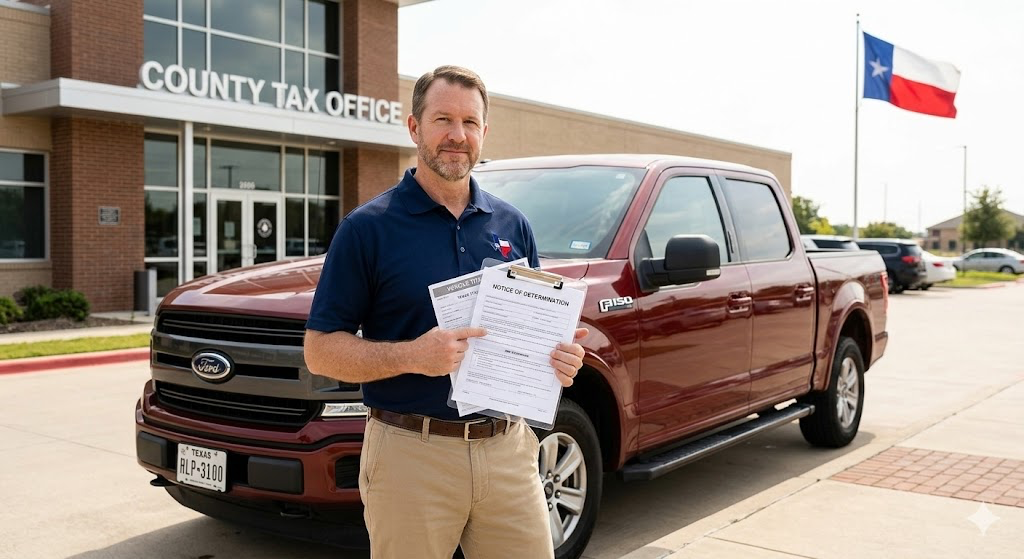
If applications receive approval, Regional Service Centers issue Notice of Determination for a Bonded Title or Tax Assessor-Collector Hearing forms designated as VTR-130-ND stating specific surety bond amounts required based on vehicle valuations calculated through Standard Presumptive Values, National Auto Dealers Association guides, or third-party appraisals as appropriate for vehicle types and availability of standardized valuation data. These notices authorize you to proceed with surety bond purchases within one year from notice dates, after which approvals expire requiring new applications with fresh documentation and additional fifteen-dollar administrative fees if you fail to complete bonding procedures within authorized timeframes.
How to Get Your Bonded Title Texas Bond
Securing your Texas certificate of title bond begins with obtaining your Notice of Determination from the Texas Department of Motor Vehicles specifying your exact bond amount, then contacting specialized surety bond providers like Swiftbonds that understand Texas bonded title requirements and maintain relationships with surety companies willing to write title bonds across all vehicle values from four thousand to hundreds of thousands of dollars for classic cars, commercial vehicles, or specialty automobiles. The application process typically involves providing vehicle information, ownership documentation, personal identification, and credit authorization allowing underwriters to evaluate risk and quote premium rates generally ranging from one to five percent of total bond amounts depending on applicant creditworthiness and bond sizes. After accepting quoted premiums and paying bond costs, surety companies issue official bond forms designated as VTR-130-SB that you must file with county tax offices within thirty days to maintain timeline compliance and avoid application expirations requiring restarting entire bonded title procedures.
Swiftbonds LLC
2025 Surety Bond Technology Provider of the Year
4901 W. 136th Street
Leawood KS 66224
(913) 214-8344
https://swiftbonds.com/
Take original Notice of Determination forms received from Regional Service Centers, purchased surety bonds from bond providers, and all documentation submitted during initial applications including photo identification, ownership evidence, vehicle inspection forms if applicable, and completed Application for Texas Title and/or Registration forms designated as Form 130-U to your county tax assessor-collector office within thirty days of purchasing surety bonds to initiate final title issuance processing. If vehicles have liens less than ten years old recorded in Texas Department of Motor Vehicles systems, you must provide original lien releases or letters of no interest from all lien holders before county offices will process bonded title applications, as outstanding liens create ineligibility for bonded title procedures requiring lien resolution through lien holder cooperation or court orders awarding ownership free and clear of recorded security interests.
Present proof of financial responsibility through insurance policies, surety bonds, or deposits meeting Texas minimum liability coverage requirements when applying for simultaneous vehicle registration allowing immediate legal operation after receiving bonded titles rather than waiting for separate registration applications after title issuance. Pay applicable title fees, registration fees, and local county processing charges varying by jurisdiction and vehicle type, with county tax assessor-collectors providing fee schedules during application submissions.
County tax assessor-collector offices review complete documentation packages, verify surety bond authenticity through issuing company confirmations, check lien releases if applicable, confirm vehicle identification number accuracy, and process bonded title applications resulting in issuance of Texas certificates of title bearing special “bonded” designations visible in title notes sections alerting future buyers that vehicles received titles through bonded procedures rather than standard ownership verification methods. These bonded title certificates allow you to register vehicles for road use, obtain insurance coverage, prove ownership to law enforcement during traffic stops, and transfer ownership to future buyers through standard title assignment procedures, although bonded designations remain visible on titles potentially affecting resale values when buyers express concerns about ownership histories requiring bonding procedures to establish legitimate ownership claims.
The Three-Party Surety Bond Structure
Texas certificate of title bonds create legal relationships among principals who are vehicle owners applying for bonded titles and purchasing surety bonds, obligees who are Texas Department of Motor Vehicles and county tax assessor-collectors requiring bonds as conditions for issuing titles without standard ownership documentation, and sureties who are insurance companies or bonding agencies guaranteeing principals’ ownership claims while accepting liability for paying claims if rightful owners emerge proving superior ownership rights.
When you purchase a Texas title bond as the principal, you promise that your ownership claim is legitimate to the best of your knowledge, that you acquired the vehicle through lawful means rather than theft or fraud, that you are unaware of any other parties holding superior ownership rights or security interests in the vehicle, and that you accept complete financial responsibility for reimbursing surety companies for any amounts they pay to injured parties who successfully prove your ownership claim was invalid or fraudulent at the time you obtained your bonded title. This reimbursement obligation extends to full claim amounts plus investigation costs, legal fees, interest charges, and administrative expenses sureties incur when investigating and paying claims filed by individuals damaged by your bonded title issuance.
The Texas Department of Motor Vehicles serves as obligee requiring bonds before issuing titles when standard ownership verification proves impossible, ensuring that individuals claiming vehicle ownership through bonded title procedures post sufficient financial guarantees to compensate anyone injured if ownership claims later prove false or disputed. The department benefits from bonded title procedures allowing legitimate owners to recover legal ownership when documentation gaps prevent standard title processing while simultaneously protecting against fraud through bond requirements creating financial consequences for anyone attempting to obtain titles through false ownership claims or stolen vehicle schemes.
Surety companies or bonding agencies acting as sureties evaluate principals’ creditworthiness, financial stability, ownership documentation quality, and fraud risk before agreeing to issue title bonds guaranteeing ownership claims, pricing bonds at rates reflecting perceived risks that claims may later arise requiring surety payments to injured parties. Sureties with strong underwriting standards and careful application reviews minimize claim frequencies by rejecting applications from individuals whose ownership documentation raises red flags, unusual circumstances, or suspicious patterns suggesting potential fraud or ownership disputes likely to generate claims within three-year bond periods.
If legitimate owners emerge during three-year bond periods proving they hold superior ownership rights to vehicles you titled through bonded procedures, those injured parties may file claims against your title bond seeking compensation for losses suffered when you obtained titles to their vehicles through Texas bonded title processes despite lacking legitimate ownership rights. Sureties investigate these claims by reviewing all available documentation, interviewing both principals and claimants, examining vehicle histories, and determining claim validity based on evidence quality and legal ownership standards under Texas law.
When sureties conclude claims are valid because claimants present superior evidence of ownership compared to documentation you provided during bonded title applications, sureties pay claimants up to full bond amounts compensating them for vehicle values lost when you obtained bonded titles to their property. These surety payments do not relieve you of financial obligations because bond agreements require you to immediately reimburse sureties for all claim amounts paid plus accrued interest, investigation expenses, legal fees, and administrative costs, creating potentially substantial debts you must satisfy through payment plans, asset liquidation, or bankruptcy proceedings if you cannot immediately repay full amounts owed to sureties who compensated injured parties on your behalf.
Bonded Title Costs in Texas
Premium rates for Texas certificate of title bonds typically range from one percent to five percent of total bond amounts annually, with specific rates determined by applicant credit scores, bond sizes, and underwriting criteria unique to individual surety companies willing to write title bonds in Texas markets.
Applicants with excellent credit scores above seven hundred typically qualify for premium rates at the low end of pricing ranges around one to two percent of bond amounts, meaning someone requiring a fifteen-thousand-dollar bond for a ten-thousand-dollar vehicle might pay one hundred fifty to three hundred dollars for three-year bond terms providing coverage throughout entire bonded title periods. These favorable rates reward applicants demonstrating financial responsibility through strong payment histories, low debt levels, and credit management patterns suggesting minimal risk of fraudulent title applications or ownership disputes likely to generate claims against surety companies.
Applicants with fair credit scores between six hundred and seven hundred face premium rates in middle pricing ranges around two-point-five to three-point-five percent of bond amounts, with fifteen-thousand-dollar bonds costing approximately three hundred seventy-five to five hundred twenty-five dollars for three-year terms. These moderate rates reflect increased risks associated with applicants whose credit histories show occasional late payments, higher debt utilization, or financial management challenges suggesting slightly elevated probabilities of claim occurrences compared to excellent credit applicants.
Applicants with poor credit scores below six hundred or bankruptcy histories within recent years encounter premium rates at high ends of pricing ranges around four to five percent or higher depending on credit severity and bond amounts, with fifteen-thousand-dollar bonds potentially costing six hundred to seven hundred fifty dollars or more for three-year terms. Some sureties decline to write title bonds for applicants with severely damaged credit, recent bankruptcies, outstanding judgments, or tax liens, forcing these individuals to seek specialty high-risk bonding programs charging premium surcharges or requiring collateral deposits securing surety positions if claims arise.
Regardless of credit quality, most Texas title bonds carry minimum premium charges around one hundred dollars even when calculated percentages based on small bond amounts would produce lower figures, ensuring sureties recover administrative costs, underwriting expenses, and minimum profit margins justifying involvement in small bond issuances that might otherwise prove unprofitable when processing costs exceed premium revenues generated from low-value bonds.
Special Situations Affecting Bonded Title Applications
Certain circumstances create unique requirements, restrictions, or complications affecting how Texas processes bonded title applications compared to straightforward cases involving simple documentation gaps.
Vehicles with recorded liens less than ten years old become ineligible for bonded title procedures unless applicants first obtain original lien releases or letters of no interest from all lien holders showing in Texas Department of Motor Vehicles databases, recognizing that lien holders maintain superior ownership interests in vehicles serving as collateral for loans, leases, or other financial obligations that must be satisfied before clear titles can issue to vehicle owners. Applicants unable to contact lien holders, unwilling to satisfy outstanding lien balances, or facing lien holder refusals to release interests cannot proceed with bonded title applications and must instead consult attorneys about obtaining court orders awarding ownership free and clear of liens through judicial proceedings where courts evaluate evidence and determine rightful ownership independently from administrative bonded title processes.
Out-of-state vehicles never previously titled or registered in Texas require vehicle identification number inspections by auto theft investigators at certified safety inspection stations before Regional Service Centers will approve bonded title applications, ensuring vehicles match manufacturer specifications, contain legitimate rather than altered identification numbers, and correspond to documentation provided in ownership evidence rather than representing stolen property with fraudulent paperwork. Local law enforcement agencies, Motor Vehicle Crime Prevention Authority grantees, and authorized inspection stations provide these specialized inspections generating Law Enforcement Identification Number Inspection forms that must accompany bonded title applications when vehicles originate from other jurisdictions without Texas title histories.
Commercial vehicles and trucks requiring weight certificates must provide official weight documentation from certified scales showing gross vehicle weights, empty weights, or payload capacities depending on vehicle classifications and registration categories sought through bonded title applications. County tax assessor-collectors use weight information to calculate registration fees, determine commercial classification requirements, and verify vehicles match descriptions provided in bonded title applications rather than representing different vehicle types than applicants claimed during application processes.
Imported vehicles purchased from foreign countries, shipped through customs, or entering United States markets through gray market channels require customs declaration forms, Department of Transportation compliance certifications, Environmental Protection Agency emissions documentation, or other federal import paperwork proving vehicles meet United States safety and environmental standards before Texas will issue bonded titles allowing registration for road use within Texas jurisdiction.
Critical Timeline Requirements
Texas bonded title procedures impose specific deadlines affecting application validity, bond purchase windows, and final title submission timeframes that applicants must satisfy to avoid application expirations requiring restarting entire processes from beginning steps.
You have one year from the date Texas Department of Motor Vehicles Regional Service Centers issue your Notice of Determination forms to purchase required surety bonds from licensed bond providers, with approvals automatically expiring if you fail to obtain bonds within twelve-month windows forcing you to submit entirely new applications with updated documentation, fresh administrative fees, and repeat vehicle inspections if originally required. This one-year window provides ample time to shop surety markets, compare premium quotes, address credit issues affecting bond pricing, or save funds necessary to pay bond premiums while preventing indefinite approval periods allowing market conditions, vehicle values, or ownership circumstances to change substantially between application approvals and bond purchases.
After purchasing surety bonds from licensed providers, you have thirty days to submit complete bonded title application packages including original Notice of Determination forms, official surety bonds, Application for Texas Title and/or Registration forms, lien releases if applicable, ownership evidence, photo identification, and proof of financial responsibility to county tax assessor-collector offices for final title processing. Missing this thirty-day deadline potentially invalidates bond purchases requiring new bonds with fresh effective dates and updated premium payments even when original bonds technically remain in force, as county offices may refuse to accept bonds exceeding thirty-day submission windows from purchase dates.
Bonded titles remain effective for three full years from issuance dates, during which anyone claiming superior ownership rights or security interests in vehicles may file claims against surety bonds seeking compensation for losses suffered when you obtained titles through bonded procedures despite their legitimate ownership positions. After three-year periods expire without valid claims arising, bonded title designations become permanent with bonds released back to principals or sureties as no longer needed to secure potential claimant compensation, and future title transfers no longer carry bonded designations alerting subsequent buyers to vehicles’ bonded title histories.
Frequently Asked Questions
Can I sell a vehicle with a bonded title in Texas?
Yes, bonded titles grant full legal ownership allowing you to sell vehicles, transfer titles to buyers, register vehicles for road use, obtain insurance coverage, and exercise all ownership rights identical to those enjoyed by owners holding standard titles without bonded designations. However, bonded title notations visible in title notes sections may affect buyer willingness to purchase or prices buyers offer when they express concerns about ownership histories requiring bonded procedures to establish legitimate ownership rather than standard title transfers from previous owners with clear documentation. During three-year bond periods, buyers purchasing vehicles with bonded titles assume risks that original owners might emerge claiming superior ownership rights and seeking vehicle returns or financial compensation through bond claims, though such occurrences remain relatively rare when bonded title applicants legitimately acquired vehicles through lawful purchases rather than fraud or theft.
What happens if someone files a claim against my title bond?
Surety companies investigate all claims filed against Texas title bonds by interviewing principals and claimants, reviewing documentation from both parties, examining vehicle histories through law enforcement databases and title records, and determining claim validity based on evidence quality and legal ownership standards. If sureties conclude claims are valid because claimants present superior ownership evidence compared to documentation you provided during bonded title applications, sureties pay claimants up to full bond amounts compensating them for vehicles or financial losses. However, you must immediately reimburse sureties for all amounts paid on claims plus investigation costs, legal fees, interest charges, and administrative expenses incurred during claim processing and payment. This reimbursement obligation creates potentially substantial debts enforceable through lawsuits, judgments, liens against your assets, wage garnishments, or collection actions if you cannot promptly repay sureties who compensated injured parties on your behalf under bond guarantee terms.
Can I get a bonded title if my vehicle has a lien?
No, vehicles with liens less than ten years old recorded in Texas Department of Motor Vehicles systems are ineligible for bonded title procedures unless you first obtain original lien releases or letters of no interest from all recorded lien holders proving they no longer claim security interests in vehicles securing loans, leases, or other financial obligations. Lien holders maintain superior ownership interests that must be satisfied before clear titles can issue, recognizing that bonded title procedures cannot override legitimate creditor rights established through secured financing agreements predating your ownership claims. If you cannot contact lien holders to request releases, lien holders refuse to release interests despite loan payoffs, or outstanding balances prevent lien satisfaction, you must consult attorneys about obtaining court orders awarding ownership free and clear of liens through judicial proceedings independent from administrative bonded title processes.
How long does it take to get a bonded title in Texas?
The complete bonded title process typically requires two to eight weeks from initial application submission to final title receipt depending on Regional Service Center processing speeds, appraisal scheduling if third-party valuations are needed, surety bond underwriting timelines, and county tax assessor-collector workload levels affecting final title processing. Simple applications for common vehicles with Standard Presumptive Values may process in as little as two weeks when applicants quickly purchase bonds after receiving Notice of Determination forms and promptly submit complete packages to county offices. Complex applications involving rare vehicles requiring third-party appraisals, out-of-state vehicles needing VIN inspections, or applicants with credit challenges complicating bond underwriting may extend to six or eight weeks when multiple steps require scheduling, waiting periods, or additional documentation gathering before proceeding to next phases.
Do bonded titles affect vehicle resale value?
Bonded title designations visible in title notes sections may reduce resale values by five to fifteen percent compared to identical vehicles with clean title histories when buyers express concerns about ownership documentation gaps requiring bonded procedures to establish legitimate ownership rather than standard title transfers with unbroken chains from manufacturers through dealers to successive owners. Some buyers refuse to purchase bonded title vehicles entirely regardless of offered discounts, particularly buyers seeking vehicles for commercial use, fleet operations, or resale purposes where clean title histories provide marketing advantages and financing benefits unavailable to bonded title inventory. However, after three-year bond periods expire without claims arising, bonded title designations lose practical significance as permanent ownership establishment through time passage eliminates realistic risks of ownership disputes emerging from decades-old transactions predating bonded title issuances.
Can I register my vehicle immediately after getting a bonded title?
Yes, bonded titles provide full legal ownership allowing immediate vehicle registration through county tax assessor-collector offices when you simultaneously apply for titles and registrations during final bonded title submission appointments, paying combined title fees, registration fees, and applicable taxes or surcharges in single transactions avoiding separate registration applications after title issuance. However, you must present proof of financial responsibility through insurance policies meeting Texas minimum liability coverage requirements before county offices will issue registration allowing legal vehicle operation on Texas roadways, as state law prohibits uninsured vehicle registration regardless of title status or ownership documentation quality.
Conclusion
Texas bonded title procedures provide legitimate pathways to vehicle ownership recovery when standard title documentation remains lost, incomplete, incorrectly assigned, or otherwise unavailable through normal county tax office processing, requiring surety bond purchases equal to one-point-five times vehicle values guaranteeing ownership claims against potential future disputes from parties claiming superior ownership rights or security interests. Understanding eligibility requirements limiting bonded title applications to Texas residents or military personnel stationed in Texas possessing complete vehicles ineligible for junked or nonrepairable classifications helps applicants determine whether bonded procedures offer viable solutions to their specific ownership documentation gaps or whether alternative approaches like Tax Assessor-Collector Hearings, court orders, or duplicate title requests might better address their circumstances.
The step-by-step application process beginning with Regional Service Center submissions, progressing through surety bond purchases within one-year windows, and concluding with county tax office final submissions within thirty days of bond purchases demands careful attention to timeline requirements and documentation standards to avoid application expirations forcing complete restarts from initial steps with additional fees and waiting periods. The three-party surety bond structure creating reimbursement obligations when claims arise ensures applicants understand financial risks assumed when obtaining bonded titles through procedures designed to balance legitimate owners’ needs for title recovery against rightful parties’ protections from fraudulent ownership claims threatening their property interests.
Premium costs typically ranging from one to five percent of bond amounts over three-year terms remain relatively modest compared to vehicle values at stake, particularly for applicants with strong credit qualifying for low-end pricing tiers making bonded title procedures financially accessible even for owners of modest vehicles worth several thousand dollars. Special situations involving liens less than ten years old, out-of-state vehicles requiring VIN inspections, commercial trucks needing weight certificates, or imported automobiles demanding customs documentation create additional complexity requiring careful planning and documentation gathering beyond standard bonded title requirements applicable to most applications.
The three-year bond period allowing claims from parties proving superior ownership rights provides sufficient time for legitimate disputes to surface while offering eventual conversion to permanent ownership when periods expire without valid claims arising, permanently establishing applicants as recognized owners whose future title transfers no longer reference bonded title histories potentially complicating resale negotiations or affecting buyer confidence in ownership legitimacy.
Five Little-Known Facts About Bonded Titles in Texas
Texas processes over twelve thousand bonded title applications annually making it one of the highest-volume bonded title states in America, reflecting the state’s large population, active used vehicle markets, high rates of private party sales bypassing dealer intermediaries who typically ensure proper title transfers, and substantial numbers of out-of-state vehicle imports from neighboring states and Mexico creating documentation complications requiring bonded title procedures when standard interstate title transfers fail due to paperwork errors or previous owner cooperation problems.
The Texas bonded title system originated in nineteen seventy-three when the state legislature recognized that legitimate vehicle owners occasionally faced insurmountable obstacles to obtaining standard titles through normal county tax office procedures despite lawfully acquiring vehicles through purchases, inheritances, gifts, or other circumstances creating ownership without corresponding title documentation, requiring alternative procedures balancing owner interests in title recovery against public interests in preventing fraudulent title issuance for stolen vehicles or property subject to undisclosed liens or ownership disputes.
Vermont offers an alternative title recovery method that some Texas residents exploit when bonded title costs or lien complications prevent using Texas procedures, as Vermont allows non-residents to obtain registrations convertible to titles after specified periods without requiring physical vehicle inspections, VIN verifications, or surety bonds creating lower barriers to title acquisition that some individuals view as easier paths than Texas bonded title procedures despite questionable legality when obtained solely to circumvent home state requirements rather than legitimate Vermont vehicle operation.
Statistical data from Texas surety bond industry associations indicates that fewer than three percent of bonded titles generate claims during three-year bond periods, with most claims arising within first twelve months when rightful owners learn about fraudulent title issuances or when lien holders discover vehicles titled without their knowledge despite recorded security interests, demonstrating that vast majorities of bonded title applicants legitimately acquired vehicles through lawful transactions despite documentation gaps preventing standard title processing.
Texas allows Tax Assessor-Collector Hearings as alternatives to bonded title procedures when applicants can identify previous owners, lien holders, or other parties potentially claiming ownership interests and prefer administrative hearings determining rightful ownership through evidence presentation rather than purchasing surety bonds guaranteeing ownership claims, with hearing procedures potentially avoiding bond costs for applicants confident their documentation will prevail over competing claims but requiring previous owner cooperation and hearing scheduling creating delays compared to bonded title processing timelines.