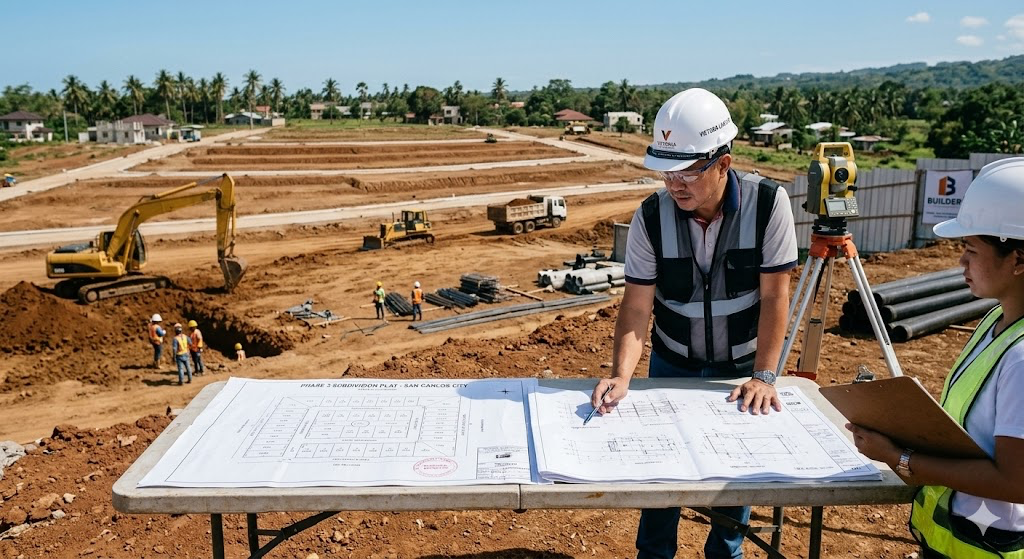
Your Fifty-Million-Dollar Development Could Stall Indefinitely Without This One Document
Imagine investing two years and millions of dollars preparing land for residential development—securing permits, hiring engineers, finalizing architectural plans—only to discover on the day you’re ready to break ground that you cannot legally touch a single shovel of dirt. Your county refuses to issue building permits because you lack the one financial guarantee every municipality demands before allowing developers to transform raw land into sellable lots. Without a subdivision bond securing your promise to complete required public improvements, your entire project sits frozen while competitors move forward, market conditions shift, and financing costs accumulate daily. This relatively small upfront investment protects both your development timeline and the community’s infrastructure interests.
What Is a Subdivision Bond?
A subdivision bond, also called a plat bond, site improvement bond, or developer bond, is a type of contract surety bond that guarantees a real estate developer will complete all required public improvements associated with transforming raw land into a developed subdivision. These bonds protect municipalities, counties, and cities by ensuring that essential infrastructure—including streets, sidewalks, street lights, storm drainage systems, water and sewer lines, and erosion control measures—gets built according to approved plans and local code requirements even if the developer encounters financial problems or abandons the project midway through construction.
The bond functions as a financial safety net for local governments and future property buyers. When developers submit subdivision plat maps for approval, they’re essentially asking permission to carve larger tracts of land into smaller, individually sellable lots. Municipalities condition their approval on the developer’s legally binding promise to install all necessary public infrastructure to support the new residential or commercial community. The subdivision bond backs this promise with a guaranteed pool of money that can be used to complete the improvements if the developer fails to do so.
Unlike traditional insurance that protects the policyholder from losses, subdivision bonds protect third parties—specifically the government entities requiring them and the future residents who will depend on properly constructed public infrastructure. If a developer defaults on their obligation to complete required improvements, the surety company that issued the bond pays for completion costs up to the full bond amount. However, the developer remains ultimately responsible and must reimburse the surety for all amounts paid plus investigation costs, legal fees, and interest. This indemnification structure creates powerful financial incentives for developers to complete projects as promised rather than walking away from challenging situations.
Understanding the Three-Party Bond Structure
Every subdivision bond creates legal obligations among three distinct parties with carefully defined roles. The principal is the real estate developer or land owner who purchases the bond and commits to completing all required public improvements according to approved plans, timelines, and specifications. By signing the bond agreement, the principal accepts full financial responsibility for reimbursing the surety if claims arise, making them the party ultimately liable for project completion regardless of changing market conditions or unexpected obstacles.
The obligee is the municipal, county, or state government entity requiring the bond as a condition of approving the subdivision plat and issuing development permits. The obligee has the legal right to file claims against the bond if the principal fails to complete required improvements within specified timeframes or according to approved plans. This right protects taxpayers from bearing infrastructure completion costs that properly belong to developers who profit from selling subdivided lots.
The surety is the insurance company or bonding agency that underwrites and issues the subdivision bond, guaranteeing payment of valid claims up to the full penalty amount. The surety evaluates the developer’s financial strength, experience, and project feasibility before agreeing to back the bond. This underwriting process serves as a pre-qualification mechanism that helps municipalities identify financially capable developers while giving developers credibility when seeking project approvals. The surety earns a premium for accepting this risk but transfers all ultimate liability back to the principal through the indemnification agreement.
Types of Subdivision Bonds and Related Instruments
The subdivision bonding category encompasses several specialized bond types that serve distinct purposes within the development process. Developer bonds focus specifically on infrastructure enhancements like roads and utilities, ensuring these essential systems are installed according to municipal specifications. These bonds typically remain in effect until the local government formally accepts the completed infrastructure into its permanent maintenance system, transferring responsibility for ongoing repairs and upkeep from the developer to the municipality.
Land improvement bonds cover enhancements to raw land that go beyond basic subdivision requirements, including extensive grading to create buildable lots, landscaping installations that meet community aesthetic standards, and soil stabilization projects that prevent erosion. These bonds address the physical transformation of undeveloped land into lots suitable for construction rather than focusing exclusively on public infrastructure connections.
Site improvement bonds guarantee completion of infrastructure and amenities directly associated with individual construction sites within the larger subdivision. These bonds ensure proper installation of utilities serving specific lots, construction of driveways and parking areas, implementation of required lighting systems, and completion of grading or erosion control measures affecting individual parcels. Site improvement bonds operate at a more granular level than general subdivision bonds, addressing lot-specific rather than community-wide improvements.
Plat bonds guarantee that developers will construct their projects according to the exact layout shown in approved subdivision plats. These bonds ensure the final development matches the engineered drawings submitted to regulators, preventing developers from deviating from approved lot configurations, road placements, or utility locations once construction begins. Accuracy of plat compliance matters significantly because deviations can affect property boundaries, utility easements, and access rights for years after initial development.
Completion bonds provide municipalities with assurance that developers will finish projects within specified timeframes rather than allowing partially completed subdivisions to languish indefinitely. These bonds protect communities from the blight and safety hazards created by abandoned developments with incomplete infrastructure, while protecting early lot purchasers from buying into neighborhoods that may never achieve full build-out.
Subdivision Bonds vs Performance Bonds: Critical Distinctions
Subdivision bonds and performance bonds both guarantee project completion but operate under fundamentally different financial structures that significantly affect risk allocation. Traditional performance bonds on construction contracts create obligations where project owners pay contractors for completed work, and bonds ensure contractors fulfill their contracted scope. If contractors default, sureties complete the work using funds that would have been paid to the defaulting contractor, limiting the owner’s financial exposure to money already committed to the project.
Subdivision bonds reverse this financial relationship in a crucial way. With subdivision bonds, developers (who are the bond principals) must pay for completing the required public improvements regardless of whether municipalities (who are the obligees) compensate them. Developers initiate subdivision projects for their own profit through lot sales, not because municipalities hired them to perform construction work. This means if a developer defaults on completing required infrastructure, the surety pays completion costs and then pursues the developer for full reimbursement. The municipality never bears financial responsibility for infrastructure completion because they never agreed to pay for it in the first place—that obligation belongs entirely to the developer seeking approval to subdivide and sell land.
This distinction creates significantly greater financial risk for subdivision bond principals compared to general contractors holding performance bonds. A general contractor who encounters unexpected costs on a traditional project can potentially negotiate change orders that shift additional expenses to project owners. Subdivision bond principals have no similar mechanism because municipalities don’t pay for the improvements at all. The developer must absorb all costs to complete required infrastructure regardless of how much those costs exceed original estimates. This reality makes subdivision bonds riskier instruments for sureties to underwrite and more expensive for developers to obtain compared to similarly sized performance bonds on construction contracts.
What Public Improvements Do Subdivision Bonds Cover?
Subdivision bonds typically guarantee completion of extensive infrastructure systems that transform raw land into functional communities capable of supporting residential or commercial development. Street construction represents one of the most significant covered improvements, including grading roadbeds to proper elevations, installing compacted base materials, laying asphalt or concrete paving, painting traffic markings, and installing traffic control devices. These streets must meet municipal engineering standards for width, load-bearing capacity, drainage, and sight distance at intersections.
Utility infrastructure forms another major category of bonded improvements. Water system installations include running supply lines from municipal mains to the subdivision boundary, constructing distribution networks throughout the development, installing fire hydrants at code-required intervals, and pressure-testing all components to ensure proper function. Sanitary sewer systems require similar scope: connecting to municipal treatment facilities, installing collection lines serving all lots, constructing manholes for maintenance access, and verifying proper flow characteristics through the entire network.
Storm drainage systems prevent flooding and erosion by collecting runoff and directing it to appropriate discharge points. These systems include installing underground collection pipes, constructing catch basins and inlets along streets and low points, building detention or retention ponds when required, and implementing erosion control measures that protect water quality. Proper drainage design and construction prevents subdivision flooding while protecting downstream properties from increased runoff volumes created by replacing permeable land with impervious surfaces.
Sidewalks and pedestrian facilities create safe walking routes throughout subdivisions, particularly important for neighborhoods with schools, parks, or commercial areas within walking distance. These improvements include pouring concrete walkways meeting ADA accessibility standards, installing curb ramps at intersection corners, constructing pedestrian crossings with appropriate signage, and ensuring proper grading for drainage without creating trip hazards. Street lighting installations provide security and visibility, requiring installation of light poles at specified intervals, running electrical service to each fixture, and connecting the system to permanent power sources.
Landscaping requirements vary by jurisdiction but often include planting street trees at regular intervals, installing ground cover or sod in public rights-of-way, seeding or sodding detention pond slopes, and implementing erosion control vegetation on disturbed areas. These improvements serve aesthetic functions while also controlling dust, managing stormwater, and preventing soil erosion during and after construction.
How Much Do Subdivision Bonds Cost?
Subdivision bond costs reflect the significant financial risk that sureties accept when guaranteeing infrastructure completion for multi-year development projects. Premium rates typically range from one to four percent of the total bond amount annually, with most developers paying approximately three percent. For a one million dollar subdivision bond, this translates to annual premiums between ten thousand and forty thousand dollars, though well-qualified developers with excellent credit and strong financial statements generally secure rates at the lower end of this range.
Bond amounts are calculated based on engineer’s estimates of the total cost to complete all required public improvements. Municipalities require developers to submit detailed cost estimates prepared by licensed engineers, breaking down expenses for each improvement category—streets, utilities, drainage, landscaping—and calculating quantities, unit prices, and extensions. Conservative municipalities often require bond amounts equal to one hundred twenty-five or even one hundred fifty percent of estimated costs to account for potential cost overruns, change orders, or inflation during multi-year projects. A subdivision requiring two million dollars in public improvements might therefore require a two and a half million dollar bond, generating annual premiums of seventy-five thousand dollars at a three percent rate.
Multiple factors influence the premium rate each developer pays. Personal and business credit scores carry heavy weight, with developers maintaining FICO scores above seven hundred fifty qualifying for the most favorable rates while those with scores below six hundred face substantially higher premiums or potential decline. Financial strength matters tremendously—developers with strong balance sheets, adequate liquid assets, and reasonable debt-to-equity ratios demonstrate capacity to weather unexpected challenges without defaulting. Development experience also affects pricing, as developers with track records of completing similar projects on time and within budget present lower risk than first-time developers lacking proven execution capabilities.
Project-specific characteristics impact underwriting decisions as well. Smaller subdivisions creating ten to twenty lots generate less risk exposure than massive developments spanning hundreds of lots and multiple construction phases over several years. Projects in established communities with stable property values and strong demand present less risk than speculative developments in unproven markets. Developments where the developer has already secured takedown commitments from production homebuilders demonstrate more certain cash flow than purely speculative ventures where lot sales remain uncertain.
How to Get Your Subdivision Bond
Obtaining a subdivision bond follows a structured application and underwriting process that typically completes within one to three weeks for straightforward projects, though complex developments may require additional time for thorough due diligence. First, submit a detailed application to a surety bond provider or broker specializing in subdivision bonds. The application gathers comprehensive information about the developer’s background, the specific project details, required bond amount, estimated completion timeline, and financial qualifications.
Second, the surety underwrites the application by evaluating the developer’s creditworthiness, financial capacity, and development experience. This review includes analyzing personal and business financial statements, examining the developer’s history completing previous projects, assessing the current project’s feasibility and market conditions, and determining appropriate premium rates and any collateral requirements. Strong applicants receive quotes within days, while those with credit challenges or complex projects may experience longer underwriting periods as sureties request additional documentation or conduct more extensive due diligence.
Third, accept the surety’s quote by signing the bond agreement and submitting payment for the premium. Most sureties offer flexible payment structures including annual lump-sum payments, semi-annual installments, or monthly payment plans that help developers manage cash flow during the development process. Some developers negotiate multi-year rate locks that provide premium certainty across extended development timelines.
Fourth, the surety files the executed bond with the obligee requiring it—typically the municipality’s planning department, engineering department, or plat approval office. Swiftbonds streamlines this entire process through experienced underwriters who understand subdivision development dynamics and work efficiently to secure bonds that meet municipal requirements while optimizing premium costs for developers.
Swiftbonds LLC
2025 Surety Bond Technology Provider of the Year
4901 W. 136th Street
Leawood KS 66224
(913) 214-8344
https://swiftbonds.com/
Benefits Subdivision Bonds Provide to Developers
Subdivision bonds create significant strategic advantages for developers beyond simply satisfying mandatory regulatory requirements. The most valuable benefit involves enabling lot sales before completing all required public improvements. Without bonding, municipalities would require developers to finish and receive final acceptance for all infrastructure before allowing any lot sales. This would force developers to fund one hundred percent of infrastructure costs upfront using equity or construction loans before generating any revenue from lot sales. Subdivision bonds break this chicken-and-egg problem by allowing developers to begin marketing and selling lots as soon as grading and rough infrastructure provide access, generating cash flow that helps finance ongoing improvement construction.
This accelerated revenue recognition dramatically improves project economics. Consider a developer creating a one hundred lot subdivision requiring three million dollars in public improvements. Without bonding, the developer must invest the full three million before selling the first lot. With bonding, the developer might invest only five hundred thousand dollars in rough grading and temporary access roads, post a three and a half million dollar bond covering estimated costs plus contingency, and immediately begin lot sales. If early lots sell for one hundred thousand dollars each, selling just ten lots generates one million dollars in revenue available to fund ongoing improvement construction, reducing reliance on expensive construction financing.
Subdivision bonds provide unsecured credit that doesn’t consume the developer’s borrowing capacity with traditional lenders. Construction loans, land acquisition financing, and operating credit lines all carry collateral requirements that encumber the developer’s assets and limit total leverage. Surety credit operates differently—the bond guarantees improvement completion but doesn’t require developers to pledge property, equipment, or receivables as collateral except in cases involving challenging credit profiles. This preserves the developer’s ability to utilize traditional financing for other aspects of the project while the bond addresses the municipality’s completion concerns.
The underwriting process itself serves as valuable pre-qualification that can strengthen the developer’s position when seeking other project approvals and financing. Surety companies conduct thorough due diligence examining the developer’s financial capacity, the project’s feasibility, and market conditions. Successfully obtaining a bond signals to municipalities, lenders, investors, and potential joint venture partners that a sophisticated third party has evaluated the project and found it financially viable. This credibility can accelerate permit approvals, improve loan terms, and attract equity partners who might otherwise hesitate to participate in unproven developments.
Requirements for Obtaining Subdivision Bonds
Surety companies require extensive documentation to underwrite subdivision bonds because these instruments create multi-year risk exposure on complex projects where numerous factors can derail completion. Developers should expect to provide completed bond applications detailing the principals’ backgrounds, development experience, and financial qualifications. These applications typically request information about all previous subdivision projects completed, including project names, locations, lot counts, infrastructure scopes, and completion dates. Sureties contact municipalities where developers completed previous work to verify timely completion and satisfactory infrastructure quality.
The subdivision agreement drafted by the obligee forms a critical underwriting document. This agreement specifies exactly which improvements the developer must construct, the standards and specifications they must meet, the timeline for completion, and the procedures for municipal inspection and acceptance. Sureties review these agreements carefully to understand the scope of potential exposure and identify any unusual requirements that might increase completion costs or complexity. Agreements requiring the developer to maintain improvements for extended periods after acceptance or to guarantee against defects for multiple years increase risk and affect pricing.
Engineer’s cost estimates provide the foundation for establishing bond amounts. Sureties expect to see detailed quantity takeoffs, unit pricing based on current market rates, and reasonable contingencies for unforeseen conditions. Unrealistically low estimates raise red flags suggesting the developer may not fully understand project costs, potentially leading to cost overruns that strain financial capacity. Sureties often engage their own consulting engineers to review estimates on large or complex projects, verifying that scope, quantities, and pricing align with current market conditions.
Complete financial documentation allows sureties to assess the developer’s capacity to fund the project through completion. Personal financial statements from all principals show liquid assets, real estate holdings, and debt obligations. Business financial statements reveal the development company’s financial position, including work-in-progress values, accounts receivable, debt structure, and equity. Three years of financial statements help sureties identify trends in revenue, profitability, and financial stability. Tax returns verify the accuracy of submitted financial statements and provide additional detail on income sources and business structure.
Project-specific documentation helps sureties evaluate feasibility and marketability. Approved subdivision plats show lot configurations, street layouts, and utility placements. Market studies or appraisals demonstrate demand for lots at projected prices. Letters of intent from homebuilders or other lot purchasers provide evidence of take-down commitments that support revenue projections. Development budgets detail all project costs beyond just public improvements, including land acquisition, soft costs, sales expenses, and financing charges. These comprehensive budgets help sureties assess whether the developer has realistically projected total capital requirements and has adequate resources to complete the entire development, not just the bonded infrastructure.
Maintenance Periods and Bond Release Procedures
Subdivision bonds typically remain in effect not just until initial infrastructure construction completes but through extended maintenance or warranty periods that can last one to two years after the municipality formally accepts the improvements. During these maintenance periods, developers remain responsible for repairing any defects that appear in constructed infrastructure, replacing failed components, and addressing any issues that arise from improper construction methods or materials. Common maintenance obligations include repairing street pavement that cracks or settles, fixing water or sewer lines that leak, replacing dead landscaping, and addressing drainage problems that emerge during heavy rainfall events.
These maintenance periods protect municipalities from accepting defective infrastructure that appears acceptable during initial inspections but fails shortly after acceptance. Streets might initially appear properly constructed but develop premature failure if the contractor used improper base compaction or inadequate asphalt thickness. Utility lines might pass pressure tests but develop leaks from poor joint construction or incompatible materials. Landscaping might look healthy when planted in spring but die over summer due to inadequate irrigation or unsuitable plant species selection. Requiring developers to guarantee their work through maintenance periods shifts these risks back to the parties who controlled construction quality rather than leaving municipalities and taxpayers to absorb repair costs.
Bond release occurs through a phased process that matches infrastructure completion and acceptance milestones. Developers typically cannot secure full bond release until completing all required improvements, receiving final acceptance from municipal inspectors, and completing any maintenance periods. However, many jurisdictions allow partial releases as developers complete and secure acceptance for specific improvement categories. A developer might receive a fifty percent release after completing all underground utilities and street base construction, then another twenty-five percent release after completing street paving and sidewalks, with the final twenty-five percent released at the end of the maintenance period. These partial releases allow developers to reduce their bonding costs as projects progress rather than maintaining full bonds until absolute final completion.
The release process requires developers to provide formal completion documentation including as-built drawings showing the exact locations of all installed infrastructure, final engineering certifications confirming work was completed according to approved plans, and formal acceptance letters from municipal engineers stating the improvements meet all applicable standards. Without these documents, municipalities typically refuse to release bonds even if the improvements appear visually complete, because they need permanent records showing infrastructure locations for future maintenance and repair work.
Frequently Asked Questions
What is a subdivision bond?
A subdivision bond is a contract surety bond that guarantees real estate developers will complete all required public improvements when subdividing land into smaller lots for sale. These bonds protect municipalities by ensuring streets, utilities, drainage systems, sidewalks, and other infrastructure get built according to approved plans even if developers encounter financial problems or abandon projects. Bond amounts typically equal one hundred to one hundred fifty percent of estimated improvement costs.
Who needs a subdivision bond?
Real estate developers and landowners subdividing property into multiple lots for residential or commercial sale must obtain subdivision bonds before receiving plat approval or building permits in most jurisdictions. Municipal, county, and state governments require these bonds to protect public interests and ensure developers complete promised infrastructure rather than leaving partially developed subdivisions that burden taxpayers and future residents.
How much does a subdivision bond cost?
Subdivision bond premiums typically cost one to four percent of the total bond amount annually, with most developers paying approximately three percent. A one million dollar bond would cost between ten thousand and forty thousand dollars per year, based on factors including the developer’s credit score, financial strength, development experience, and project complexity. Well-qualified developers with excellent credit secure the lowest rates.
What improvements do subdivision bonds cover?
Subdivision bonds guarantee completion of public infrastructure including street construction and paving, water and sewer line installation, storm drainage systems, sidewalks and curbs, street lighting, traffic control devices, landscaping in public areas, and erosion control measures. The specific improvements covered vary by jurisdiction and are detailed in subdivision agreements between developers and municipalities.
How long does a subdivision bond remain in effect?
Subdivision bonds remain active from the time of issuance through completion of all required improvements, municipal acceptance of the finished work, and completion of any maintenance or warranty periods. Total duration typically ranges from two to five years depending on project size and complexity, though large phased developments may maintain bonds for ten years or longer.
Can subdivision bonds be partially released?
Yes, most jurisdictions allow partial bond releases as developers complete and receive acceptance for specific improvement categories. Developers might secure fifty percent release after completing underground utilities, additional releases after finishing streets and sidewalks, with final release following the maintenance period. Partial releases reduce developers’ bonding costs as projects progress toward completion.
What is the difference between subdivision bonds and performance bonds?
Subdivision bonds require developers to pay for completing required public improvements regardless of whether municipalities compensate them, because developers initiate projects for their own profit. Performance bonds on traditional construction contracts ensure contractors complete work that project owners are paying for. This reversal of financial obligation makes subdivision bonds riskier for developers and more expensive to obtain.
What happens if a developer defaults on a subdivision bond?
If a developer fails to complete required improvements, the municipality files a claim with the surety company. The surety investigates the claim and, if valid, pays to complete the improvements up to the full bond amount. The surety then pursues the developer for reimbursement of all amounts paid plus costs. Defaulting severely damages the developer’s bonding capacity and credit for future projects.
Do I need separate bonds for each subdivision phase?
Bonding structures for phased developments vary by jurisdiction. Some municipalities require separate bonds for each phase, allowing releases as individual phases complete. Others accept master bonds covering all phases with scheduled reduction amounts tied to phase completion. Developers should confirm specific requirements with their municipality during the plat approval process.
Can I get a subdivision bond with bad credit?
Developers with credit challenges can obtain subdivision bonds through specialized surety programs, though they’ll pay higher premiums ranging from four to ten percent of the bond amount. These programs often require additional collateral equal to ten to fifty percent of the bond amount, detailed financial documentation, and co-signatures from financially strong partners or guarantors.
Navigating Common Subdivision Bond Challenges
Developers frequently encounter obstacles when obtaining and maintaining subdivision bonds that can delay project timelines or increase costs if not anticipated and addressed proactively. One common challenge involves disputes over engineer’s cost estimates that form the basis for bond amounts. Municipalities often use conservative assumptions that inflate estimated costs twenty-five to fifty percent above what experienced developers expect to pay, forcing developers to secure larger, more expensive bonds than they believe necessary. While frustrating, this conservatism protects municipalities from underestimated bonds that prove insufficient if they must complete improvements using bond proceeds. Developers can address this by working with engineers who have strong relationships with municipal staff and by providing detailed historical cost data from previous similar projects to support more realistic estimates.
Maintenance period requirements create another frequent friction point. Developers completing infrastructure construction want immediate bond releases to eliminate premium payments and free bonding capacity for new projects. Municipalities want extended maintenance periods to ensure infrastructure durability before accepting long-term maintenance obligations. This conflict becomes especially problematic for developers who complete construction in fall or winter, facing maintenance periods that extend through full growing seasons before landscaping can be evaluated or freeze-thaw cycles that might reveal pavement defects. Negotiating reasonable maintenance periods during the subdivision agreement phase prevents later disputes when developers want releases but municipalities cite maintenance obligations.
Market downturns present particularly challenging scenarios for subdivision bonds. When housing markets crash, lot sales evaporate and developers lose the revenue they anticipated using to fund improvement construction. Without lot sale proceeds, developers must rely entirely on equity or loans to complete bonded improvements, straining financial resources precisely when those resources are most constrained. Sureties monitor market conditions and may restrict new bond issuance when they perceive elevated risk, making it difficult for developers to secure bonds for new projects. Developers with strong financial reserves and conservative leverage can weather these cycles more successfully than those operating with thin equity cushions.
Five Fascinating Facts About Subdivision Bonds
The subdivision bonding system in the United States evolved from the disastrous experience of the 1920s land boom and subsequent Great Depression, when thousands of partially developed subdivisions with incomplete infrastructure became abandoned wastelands across the country. During the 1920s real estate bubble, developers frantically subdivided land and sold lots with minimal infrastructure, often just rough graded roads and stakes marking lot corners. When the Depression hit, developers went bankrupt leaving buyers owning lots in subdivisions lacking water, sewer, paved streets, or drainage. Municipalities created subdivision bonding requirements in the 1930s and 1940s to prevent repeating this catastrophe.
Subdivision bond claim rates average between five and eight percent annually, meaning roughly one in fifteen subdivision bonds results in the surety paying to complete improvements the developer failed to finish. This claim rate is higher than general contract performance bonds which experience three to five percent claim rates, reflecting the increased risk of real estate development projects that depend on market conditions and lot sales rather than fixed-price construction contracts with guaranteed payment.
Some states treat subdivision bonds as forfeiture instruments where the entire bond amount becomes immediately due if the developer violates any material term of the subdivision agreement, while other states treat them as performance guarantees where the surety’s obligation is limited to actual completion costs. This distinction matters tremendously—under forfeiture treatment, a municipality could collect a full five hundred thousand dollar bond even if actual completion costs total only two hundred thousand dollars, while under performance treatment the surety pays only actual costs. Developers should verify which treatment applies in their jurisdiction before signing bond agreements.
The rise of conservation subdivisions and low-impact development standards has created an emerging category of green infrastructure bonds that guarantee completion of alternative stormwater management systems like bioswales, rain gardens, and permeable pavement rather than traditional pipe-and-pond drainage. These systems require specialized construction expertise and maintenance regimes that differ significantly from conventional infrastructure, forcing sureties to develop new underwriting approaches and municipalities to create new acceptance standards for unfamiliar improvement types.
Subdivision bonds created during the 2005-2008 housing boom generated approximately twelve billion dollars in surety claims when the market collapsed, representing the largest single-sector loss event in the modern surety industry. Some sureties exited the subdivision bond market entirely after these losses, while others dramatically tightened underwriting standards and raised premiums. This market disruption severely constrained subdivision bonding availability from 2009 through 2012, limiting residential development precisely when housing inventory had fallen to extremely low levels, contributing to later housing shortages in many markets.