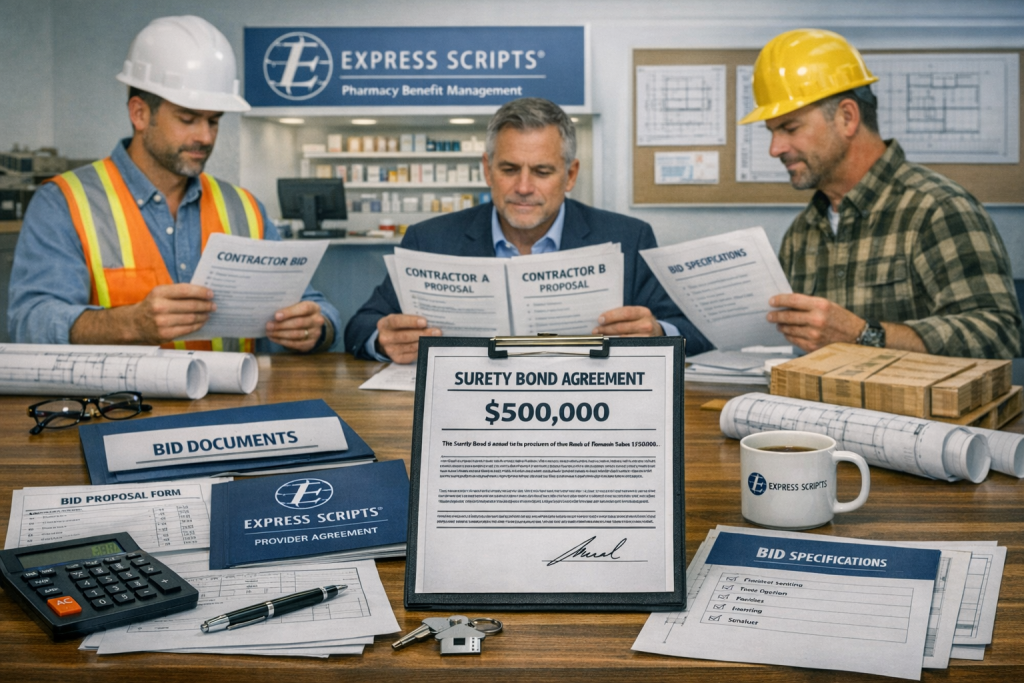
You’ve just spent two weeks preparing the perfect bid for a major government construction project, carefully calculating costs and assembling subcontractor quotes—only to discover the bid documents require something called a “bid bond” that you’ve never heard of and need to submit within forty-eight hours. Understanding what this bond actually guarantees, why it costs virtually nothing despite protecting hundreds of thousands of dollars, and how to obtain one quickly could mean the difference between submitting a competitive bid and missing the opportunity entirely.
A bid bond is a type of surety bond that guarantees a contractor’s bid is submitted in good faith and that the contractor will enter into the contract at the bid price if awarded the project. This bond assures the project owner that the winning bidder will sign the contract, provide required performance and payment bonds, and begin work according to the terms proposed, protecting owners from contractors who submit low bids to win contracts but then refuse to honor their commitments or cannot secure necessary financing and bonding to actually perform the work.
Understanding the Bid Bond Concept and Purpose
Bid bonds emerged as essential tools in construction procurement to solve a persistent problem that plagued project owners before bonding became standard practice. In earlier times when bid bonds were less common, project developers frequently awarded contracts to contractors who had underbid their proposals either intentionally to secure work they couldn’t actually perform profitably, or through negligence and poor estimating that resulted in unrealistically low prices.
These low-ball bids created serious complications for owners who relied on competitive bidding to identify the best value contractors. After awarding contracts to the apparent low bidder, owners discovered the contractor couldn’t actually complete work at the bid price. This forced owners into uncomfortable positions—either renegotiate contract terms at higher prices, essentially rewarding the low-ball bidder for inaccurate estimates, or go back to the drawing board and restart the entire bidding process while construction schedules slipped.
Bid bonds solve this problem by creating financial accountability for contractors during the bidding phase. When you submit a bid bond with your proposal, you’re making a legally enforceable promise backed by a surety company that you’ll honor your bid if selected. This financial guarantee ensures that only serious, qualified contractors participate in bidding processes, eliminating frivolous or speculative bids that waste everyone’s time and money.
The bond protects the substantial investment project owners make in competitive bidding processes. Public agencies spend significant resources advertising projects, preparing detailed specifications, conducting pre-bid meetings, evaluating proposals, and making award decisions. Private owners similarly invest time and expertise assessing contractor qualifications and comparing bids. Bid bonds ensure this investment isn’t wasted by contractors who win selections but refuse to proceed.
The Three-Party Bid Bond Structure
Bid bonds follow the standard three-party surety framework creating distinct roles and responsibilities for each participant. Understanding these relationships clarifies your actual obligations and the protections provided to project owners.
The principal represents the contractor or bidder purchasing the bond and assuming all financial responsibility for honoring the bid if awarded the contract. As principal, you guarantee that your bid accurately reflects the price at which you can complete the project. You promise to enter into the contract if selected and provide any required performance and payment bonds before work begins. If you fail to honor these commitments, you become liable to reimburse the surety for any claims paid.
The obligee is the project owner, general contractor, or public agency requiring the bid bond as part of the procurement process. The obligee receives financial protection if the winning bidder refuses to proceed with the contract. They can file claims against the bond to recover damages incurred from your withdrawal, typically the cost difference between your bid and the next lowest qualified bidder they must hire instead.
The surety is the insurance or bonding company that underwrites and issues the bid bond, evaluating your qualifications before approval. The surety guarantees payment to the obligee if you win the bid but fail to enter into the contract or provide required contract bonds. They investigate all claims to verify validity before making payments, then pursue reimbursement from you for amounts paid plus investigation costs.
This three-party structure means bid bonds protect project owners from your potential failures during the bidding and award process. You’re providing financial assurance that owners won’t incur unexpected costs from your bid withdrawal or inability to proceed after selection.
How Bid Bond Claims Actually Work
Understanding the claim mechanism helps you appreciate the limited financial risk bid bonds create compared to other bond types. The claim calculation differs significantly from what many contractors initially assume.
When you win a bid but fail to honor it by refusing to sign the contract or being unable to provide required performance and payment bonds, the project owner can file a claim against your bid bond. However, the claim amount doesn’t equal the full bond amount in most cases. Instead, the surety pays the difference between your winning bid and the next closest qualified bidder’s price.
For example, if you submitted the winning bid at five hundred thousand dollars but the second-place bidder proposed five hundred twenty-five thousand dollars, and you withdraw forcing the owner to hire the second bidder, the owner’s actual damages equal twenty-five thousand dollars—the extra amount they must now pay. Your bid bond claim would be twenty-five thousand dollars even if the bond itself was written for fifty thousand dollars.
This calculation reflects the actual economic harm your withdrawal caused. The owner didn’t lose the full project cost—they simply had to pay more than your low bid to get the work completed. The bid bond compensates them for this price difference, making them whole without creating windfall recoveries.
Some bid bonds contain forfeiture language changing this calculation. These bonds allow the owner to claim the full bond amount regardless of the actual spread between bids. Contractors should carefully review bond forms to understand whether they face limited liability based on bid spreads or full forfeiture provisions that create maximum exposure.
Regardless of the claim calculation method, you must reimburse the surety for any amounts they pay. Bid bonds aren’t insurance where the surety absorbs losses. They’re financial guarantees where the surety provides immediate payment to the owner but maintains full rights to collect from you personally and corporately.
Bid Bond Amounts and Percentages
Bid bond amounts follow consistent industry standards tied to the total bid value rather than absolute dollar figures. Understanding these calculations helps you anticipate bonding requirements before reviewing specific project documents.
Standard bid bonds equal five to ten percent of the total bid amount. A five-hundred-thousand-dollar construction bid typically requires a twenty-five-thousand to fifty-thousand-dollar bid bond depending on whether the owner specified five or ten percent coverage. A ten-million-dollar project might demand a five-hundred-thousand to one-million-dollar bid bond following the same percentage structure.
The percentage requirement appears in the invitation to bid or request for proposals. Public agencies often standardize on ten percent for all projects to simplify procurement administration. Private owners may adjust percentages based on project complexity, contractor qualifications, or market conditions.
The logic behind these percentages relates to typical bid spreads in competitive bidding. When multiple qualified contractors bid competitively on well-defined scopes, their proposals usually cluster within five to ten percent of each other. The bid bond amount covers the expected spread between the low bidder and second-place bidder, providing adequate protection without requiring excessive bonding.
Some bid bonds are written for specific dollar amounts rather than percentages. Government agencies may establish fixed bond amounts for project categories regardless of actual bid values. These fixed amounts still typically fall within the five to ten percent range but don’t adjust proportionally for unusually high or low bids.
The bond amount represents the maximum liability the surety assumes, not necessarily what you’ll pay if you withdraw. Remember the claim calculation discussed earlier—actual claims often run less than the full bond amount when based on bid spreads rather than forfeiture provisions.
The Surprisingly Low Cost of Bid Bonds
One of the most misunderstood aspects of bid bonds is their cost structure, which differs dramatically from performance and payment bonds that contractors may be more familiar with.
Most bid bonds are completely free or cost a nominal flat fee typically ranging from zero to one hundred dollars regardless of the bond amount. Whether you need a twenty-five-thousand-dollar bond or a one-million-dollar bond, the premium stays the same—often nothing. Many surety companies, including specialized construction bond providers, offer bid bonds free of charge to qualified contractors.
This pricing structure surprises contractors accustomed to percentage-based premiums on other bond types. Performance bonds typically cost one to three percent of the contract value annually. Payment bonds carry similar rates. Why do bid bonds with potentially substantial liability cost virtually nothing?
Bid bonds carry minimal risk for surety companies because they’re essentially qualification checks rather than true performance guarantees. When a surety issues you a bid bond, they’re confirming you can obtain the performance and payment bonds required if you win the contract. They’ve already evaluated your creditworthiness, financial capacity, and project experience. The bid bond doesn’t create significant new risk beyond what they’ll assume if you’re awarded the work.
Sureties make their real money on performance and payment bonds when you win contracts and begin construction. Offering free bid bonds makes business sense because it positions the surety to earn substantial premiums on the subsequent contract bonds. The bid bond serves as marketing and relationship-building for the more profitable bonds that follow contract awards.
This cost structure creates important strategic considerations. If your credit or financials won’t support a performance bond for the project size, obtaining a bid bond doesn’t actually help you. You’d win the bid but be unable to follow through when you couldn’t secure the required performance bond. Reputable surety agents verify your performance bond eligibility before issuing bid bonds to avoid putting you in this awkward position.
When Bid Bonds Are Required
Bid bond requirements vary based on project type, funding source, and owner preferences. Understanding when you’ll face bonding requirements helps you prepare for procurement opportunities.
The Miller Act mandates bid bonds along with performance and payment bonds for all federal construction projects exceeding certain dollar thresholds. While performance and payment bonds receive more attention as the headlining requirements, bid bonds represent equally mandatory prerequisites for federal work. Federal contracting officers cannot waive bid bond requirements when performance and payment bonds are mandated.
State and local government projects typically require bid bonds following “Little Miller Act” statutes that parallel federal requirements. Public works projects funded with taxpayer money almost universally demand bid bonds because government agencies want assurance that only serious, qualified contractors participate in competitive bidding. The public procurement process involves significant administrative work, and bid bonds prevent unqualified bidders from wasting government resources.
Many private project owners require bid bonds even without legal mandates. Developers investing in large commercial construction projects, industrial facilities, or institutional buildings want the same protections that government agencies demand. Private bid bonds ensure the owner can complete their procurement process efficiently without contractors withdrawing after selection.
Federal acquisition regulations specifically state that contracting officers shall not require bid guarantees unless performance bonds or performance and payment bonds are also required. However, whenever performance and payment bonds are mandatory, bid guarantees become equally required except in specific exempted circumstances.
Not all construction projects require bid bonds. Small private jobs, negotiated contracts, and work procured through established contractor relationships may proceed without bonding. However, any competitive bidding process for substantial projects likely includes bid bond requirements to protect the owner’s investment in the procurement process.
Benefits to Project Owners and Contractors
Bid bonds create value for both project owners conducting procurements and contractors pursuing work opportunities. Understanding these benefits helps you appreciate why bonding became industry standard.
For project owners, bid bonds provide financial protection against contractors who withdraw after winning bids. When you invest weeks or months in competitive procurement, advertising widely, conducting site visits, answering bidder questions, and evaluating complex proposals, having the selected contractor withdraw creates serious problems. Bid bonds compensate owners for the extra costs incurred hiring replacement contractors at higher prices.
Bid bonds prequalify contractors by confirming they can obtain necessary performance and payment bonds. Owners gain confidence that bidders who submit proposals can actually execute contracts if selected. This screening function filters out unqualified contractors before owners invest time evaluating proposals from firms that couldn’t actually deliver.
Bid bonds keep bidding processes competitive by encouraging serious participation. When contractors know competitors must commit financially to their bids through bonding, it reduces concerns about frivolous low-ball bids that won’t materialize. This encourages good contractors to bid aggressively knowing the playing field is level.
For contractors, bid bonds provide competitive advantages by demonstrating financial strength and surety relationships. Successfully obtaining bid bonds signals to owners that you’re an established, qualified contractor with the bonding capacity to handle substantial projects. This credibility helps you compete against larger firms.
Bid bonds don’t tie up cash or bank credit lines during bidding processes unlike cash bid deposits that some owners might otherwise require. You can bid on multiple projects simultaneously without maintaining large cash reserves for deposits. The bonding structure provides flexibility while still protecting owners.
Bid bonds cost virtually nothing compared to the contract values they enable you to pursue. Free or nominal bonding costs create access to lucrative government and private contracts that might otherwise remain unavailable to contractors without bonding relationships.
How to Get a Bid Bond
Getting your bid bond follows a straightforward process that experienced contractors with established surety relationships can complete in hours or days depending on project size and complexity. Start by contacting your surety company or bonding agent as soon as you identify a project you want to bid on, providing them with the invitation to bid, project specifications, your estimated bid amount, and the bond percentage or amount required. Companies like Swiftbonds that specialize in construction bonding can expedite this process by maintaining your prequalification information and quickly generating bonds for projects within your established bonding capacity.
The surety evaluates whether the project falls within your bond line—the maximum project size they’re comfortable bonding you for based on your financial strength, experience, and current backlog. For projects within your established capacity, they issue the bid bond immediately, often at no cost. For larger projects exceeding your current bond line, they may require additional financial documentation and take several days for underwriting review. Once approved, the surety provides the bond document you submit with your bid proposal according to the owner’s instructions, typically by the bid deadline specified in the procurement documents.
Swiftbonds LLC
2025 Surety Bond Agency of the Year
4901 W. 136th Street
Leawood KS 66224
(913) 214-8344
https://swiftbonds.com/
The Underwriting Process for Bid Bonds
Understanding how sureties evaluate bid bond applications helps you prepare documentation and manage expectations about approval timelines. The underwriting rigor varies substantially based on project size and your established bonding history.
For small projects under one hundred thousand dollars submitted by contractors with existing surety relationships, bid bond approval often occurs instantly or within hours. The surety already maintains your financial information from previous bonds and simply confirms the new project fits within your established bond line. These routine approvals require minimal documentation beyond the invitation to bid and your estimated bid amount.
Larger projects approaching or exceeding one million dollars demand more comprehensive underwriting even for established contractors. Sureties review detailed financial statements including balance sheets showing assets, liabilities, and net worth. They analyze income statements demonstrating profitability and cash flow generation. They examine work-in-progress schedules showing your current project backlog and remaining capacity.
The surety evaluates your ability to complete the specific project based on your experience with similar work. They want confidence that you’ve successfully delivered projects of comparable size, scope, and complexity. Contractors bidding on project types they’ve never performed face greater scrutiny and potentially higher costs or approval denials.
Your creditworthiness influences underwriting even though bid bonds themselves typically cost nothing. The surety knows they might ultimately write performance and payment bonds if you win, so they evaluate your full financial profile during bid bond review. Strong personal and business credit scores smooth the approval process while poor credit creates obstacles.
Financial statements prepared by certified public accountants carry more weight than internally prepared documents. Utilizing a CPA to compile, review, or audit your financials demonstrates professionalism and provides sureties greater confidence in the accuracy of information presented.
First-time bond applicants should allow extra time for underwriting. Sureties need to establish your complete financial profile and verify representations about your business. Plan for at least one to two days for small projects under one hundred thousand dollars and up to a week or more for large projects exceeding one million dollars when applying for bonds for the first time.
Bid Bonds Versus Letters of Bondability
Contractors sometimes confuse bid bonds with letters of bondability, also called “good guy letters” or “sunshine letters.” Understanding this distinction prevents embarrassing situations during procurement processes.
A letter of bondability is a general statement from a surety company confirming they have a relationship with your construction company and provide bonding services to you. These letters indicate you’re a bonding client but make no commitments about specific projects or bond amounts. They serve as references demonstrating you have surety connections, but they don’t guarantee bonding for particular jobs.
Project owners sometimes request letters of bondability during prequalification processes to verify contractors have bonding capacity before they invest time evaluating detailed proposals. These letters provide general assurance without committing sureties to specific projects.
However, letters of bondability are not substitutes for actual bid bonds. If a project requires a bid bond, you cannot submit a letter of bondability instead. Bid bonds are underwritten for specific projects at specific amounts, guaranteeing the surety will provide performance and payment bonds if you’re awarded that particular contract. Letters of bondability make no such project-specific commitments.
When project owners want true verification that you can be bonded for their specific job, they should request an actual bid bond rather than a letter of bondability. Bid bonds demonstrate you’ve been prequalified for the exact project and bond amount, providing owners far greater assurance than generic relationship letters.
Frequently Asked Questions
Why are bid bonds typically free when other surety bonds cost money?
Bid bonds carry minimal risk for surety companies because they’re essentially confirming you can qualify for the performance and payment bonds required if you win the contract. The surety already evaluated your creditworthiness and financial capacity during the bid bond underwriting. Since they’ll earn substantial premiums on performance and payment bonds when you win projects, offering free bid bonds makes business sense. The bid bond serves as a qualification check and relationship-building tool for the more profitable bonds that follow.
What happens if I win the bid but then discover I made a serious mathematical error in my estimate?
Your ability to withdraw depends on when you discover the error and whether you can prove it was a genuine nonjudgmental mistake rather than deliberate low-balling. If you identify obvious calculation errors before the bid opening, you can typically withdraw without penalty and your bid security is returned. After bid opening, you may withdraw only if you can establish by clear and convincing evidence that a bona fide mistake occurred. Even then, your bid bond remains at risk because the owner suffered damages from your flawed bid. Honest mistakes don’t automatically excuse you from bond liability.
Can I bid on multiple projects simultaneously with the same bid bond?
No. Each bid bond is written for a specific project, specific bid amount, and specific obligee. You cannot use one bid bond for multiple projects. However, you can obtain multiple bid bonds simultaneously for different projects you’re bidding on at the same time. Since bid bonds typically cost nothing, obtaining multiple bonds doesn’t create significant expense. Your surety’s main concern is whether all the projects combined exceed your total bonding capacity.
If I don’t win the bid, do I get any money back from the bid bond?
There’s typically no money to get back because you didn’t pay a premium for the bond in most cases. Bid bonds are usually free. If you did pay a nominal fee like one hundred dollars for the bond, that fee is generally non-refundable regardless of whether you won the bid. The bond simply expires when the project is awarded to another contractor or when the bid validity period ends without an award.
What if I win the bid but the performance bond costs more than I expected?
You should verify performance bond pricing before submitting your bid. Reputable surety agents help you understand what the performance and payment bonds will cost when you’re preparing your bid, allowing you to factor those costs into your pricing. If you discover after winning that bond costs exceed your estimates, you’re still obligated to proceed. You cannot withdraw claiming bond costs were higher than anticipated without triggering bid bond liability. This underscores the importance of confirming bond pricing before bidding.
Can I provide a cashier’s check instead of a bid bond?
Some project owners accept bid security in multiple forms including certified checks, cashier’s checks, or bonds. However, many public agencies specifically require bid bonds from licensed surety companies rather than cash instruments. Always check the invitation to bid for acceptable forms of bid security. Even when cash is acceptable, bid bonds offer advantages by not tying up your working capital during the bidding process.
How long does a bid bond remain valid?
Bid bonds remain valid for the period specified in the invitation to bid, typically sixty to ninety days from the bid opening date. This gives the owner time to evaluate proposals and make award decisions. If the procurement process extends beyond the bid validity period, the owner may request bid bond extensions from all bidders. You can refuse to extend but that typically eliminates you from further consideration.
What’s the difference between a bid bond and a bid deposit?
A bid deposit is cash or a check you provide as bid security, which the owner holds until contract award. Bid deposits tie up your working capital and create cash flow problems if you’re bidding on multiple projects simultaneously. Bid bonds provide the same security to owners without requiring you to deposit actual money. The surety guarantees payment if you default, but you don’t provide upfront funds. Contractors strongly prefer bid bonds over bid deposits for this reason.
If I withdraw my bid before the bid opening, do I lose my bid bond?
No. If you withdraw before the bid opening, no action is taken against you or your bid security. The bid bond is returned or cancelled with no penalty. Once bids are opened, withdrawal becomes problematic and triggers potential bond claims. Always withdraw before the opening if you’ve decided not to proceed with a bid.
Can I get a bid bond with bad credit or limited financial strength?
Bid bond approval is generally easier than performance bond approval, but you still need to qualify for the performance bond to make the bid bond meaningful. If your credit or financials won’t support a performance bond for the project size, getting a bid bond doesn’t help because you can’t follow through after winning. However, SBA-backed bond programs can help contractors with credit challenges qualify for projects up to six-and-a-half million dollars. Discuss your situation with surety specialists who can evaluate whether alternative bonding programs make sense for your profile.
Conclusion
Bid bonds represent essential tools in construction procurement, protecting project owners from contractors who submit bids in bad faith while creating minimal cost burden for qualified contractors pursuing work opportunities. These specialized surety bonds guarantee that winning bidders will honor their proposals by entering into contracts and providing required performance and payment bonds, ensuring competitive bidding processes operate efficiently without frivolous participation.
The three-party structure involving contractors as principals, project owners as obligees, and surety companies as guarantors creates financial accountability during the critical period between bid submission and contract execution. When contractors win bids but withdraw, project owners recover damages through bond claims, typically calculated as the price difference between the withdrawn bid and the next lowest qualified bidder.
Understanding that bid bonds typically cost nothing despite protecting substantial contract values helps contractors appreciate the efficiency of this bonding structure. Sureties offer free bid bonds because they’re essentially prequalifying contractors for the more profitable performance and payment bonds that follow contract awards, creating a win-win situation where owners gain security and contractors access opportunities without upfront bonding costs.
The Miller Act and similar state laws mandate bid bonds for public construction projects, while many private owners voluntarily require them to protect their procurement investments. Whether legally required or voluntarily imposed, bid bonds have become standard practice in competitive construction bidding because they effectively filter serious qualified contractors from speculative bidders.
Working with experienced surety companies or bonding agents streamlines the bid bond process, particularly for contractors pursuing multiple opportunities simultaneously. Establishing your bond line and maintaining current financial information with your surety allows rapid bid bond issuance when opportunities arise, giving you competitive advantages in time-sensitive procurement processes.
Five Critical Facts About Bid Bonds Missing From Standard Resources
The concept of conditional versus unconditional bid bonds creates dramatically different risk profiles that most resources fail to distinguish clearly. Conditional bid bonds, common in the United States, only pay claims when the contractor withdraws after being awarded the contract or fails to provide required performance bonds. Unconditional or “on-demand” bid bonds prevalent in international markets pay immediately when the owner makes a claim regardless of whether the contractor actually breached any obligations. Middle Eastern and Asian construction markets frequently demand unconditional bonds where owners can call bonds for almost any reason including claims the contractor disputes. American contractors bidding on international projects must understand whether bonds are conditional or on-demand because the latter creates substantially greater exposure to frivolous claims.
The bid bond validity period versus the contract execution deadline creates a hidden timing trap that catches many contractors. Your bid bond typically expires sixty to ninety days after bid opening, but some procurement processes drag on for months due to protests, evaluation delays, or funding issues. If the owner doesn’t award the contract before your bid bond expires, you face uncomfortable choices. You can extend your bond, maintaining your bid but creating ongoing liability. You can refuse to extend, effectively withdrawing your bid. Or you can negotiate with the owner about shortened validity periods for extensions. Sophisticated contractors negotiate contract execution deadlines aligned with reasonable bid bond validity periods before submitting proposals, preventing indefinite bid liability.
The interaction between bid bonds and bid shopping by general contractors creates ethical complexities most resources ignore. When general contractors receive subcontractor bids during prime contract procurement, those subcontractors typically aren’t bonded. After the general contractor wins the prime contract using those subcontractor prices, they sometimes “shop” the bids by soliciting lower prices from other subcontractors, leaving the original bidders without the work they expected. This practice, while controversial, remains common because subcontractors rarely provide bid bonds to general contractors. The prime contractor’s bid bond to the owner doesn’t extend protection to subcontractors the prime contractor used for pricing but later abandoned.
Bid protest procedures in federal and state procurement create scenarios where your bid bond remains active far longer than anticipated while competitors challenge award decisions. When an unsuccessful bidder protests an award decision claiming evaluation errors or unfair practices, the procurement process stops while agencies investigate. These protests can extend months or even years in complex cases. Your bid bond must remain active throughout the protest period even though you haven’t begun work and may never receive the contract if the protest succeeds. Understanding protest timelines and procedures helps you assess total risk duration beyond simple bid validity periods.
The relatively obscure doctrine of “mutual mistake” in bid law can invalidate contracts even after bid bonds would normally lock in commitments. When both the owner and contractor operated under a shared fundamental misunderstanding about essential contract terms or project conditions, courts may rescind contracts without triggering bid bond liability. For example, if bid documents contained specifications for the wrong site and both parties only discovered the error after award, mutual mistake doctrine might allow contract cancellation without penalizing the bonded contractor. This rare exception to bid bond finality requires sophisticated legal analysis but provides important protection when truly fundamental errors affect all parties equally.