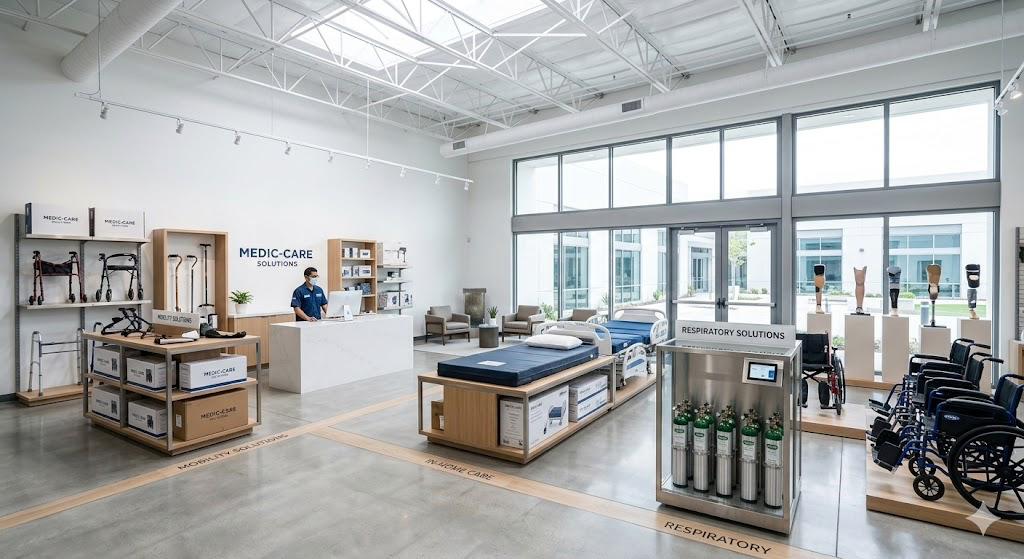
Starting a medical equipment supply business sounds straightforward until you encounter Medicare’s $50,000 bond requirement that stands between your business plan and your first reimbursement check. Every supplier selling wheelchairs, hospital beds, oxygen equipment, or any durable medical device to Medicare patients must secure this surety bond before receiving approval to bill the program—and understanding exactly what qualifies as “durable,” how much the bond actually costs, and which mistakes cause applications to fail can mean the difference between launching your business on schedule or facing months of enrollment delays that drain your startup capital.
What Is a Durable Medical Equipment Bond?
A durable medical equipment bond is a $50,000 surety bond mandated by the Centers for Medicare and Medicaid Services for any business that sells or rents medical equipment to Medicare beneficiaries. This financial guarantee creates a three-party contract between your company as the equipment supplier, a surety company that backs the bond, and CMS as the government agency protected by the bond.
The bond specifically covers equipment classified as “durable” under Medicare definitions. Durable medical equipment must withstand repeated use, serve a medical purpose, be appropriate for home use, and have an expected lifespan of at least three years. This category encompasses a wide range of products from mobility devices like wheelchairs and walkers to respiratory equipment like oxygen concentrators and CPAP machines, therapeutic items such as hospital beds and patient lifts, and essential supplies including diabetic testing equipment and wound care products.
Unlike traditional insurance that protects your business from claims, this bond protects Medicare and taxpayers from financial losses caused by supplier fraud or billing violations. If your company submits false claims, bills for equipment never delivered, or violates Medicare supplier standards, CMS can file a claim against your bond to recover taxpayer funds. The surety company investigates the claim and, if valid, pays CMS up to the full $50,000—then immediately demands you reimburse them for the entire amount plus interest and legal fees.
This bond requirement exists under federal regulation 42 CFR 424.57, which sets supplier standards for Medicare enrollment. The regulation became fully effective in 2009 as part of broader efforts to reduce Medicare fraud and ensure only legitimate, financially stable suppliers participate in the program. Every state follows the same federal requirement—there are no regional variations in the $50,000 bond amount, though some states impose additional bonding requirements for state-level licensing.
The bond remains active as long as you maintain Medicare billing privileges. You must renew it annually and keep it current without any coverage gaps, because even a single day without active bond coverage triggers compliance violations that can suspend your billing privileges and halt revenue completely.
Understanding What Equipment Qualifies
Medicare’s definition of durable medical equipment determines whether you need this bond, making it essential to understand which products fall under this category and which do not.
Mobility equipment represents the largest category of durable medical devices. Wheelchairs—both manual and power models—require bonding when sold or rented to Medicare patients. This includes standard wheelchairs, lightweight transport chairs, bariatric models designed for higher weight capacities, and complex rehabilitation wheelchairs with specialized seating systems. Mobility scooters, walkers with or without wheels, canes, and crutches all qualify as durable equipment requiring bonding.
Respiratory therapy equipment forms another major category. Oxygen concentrators that produce oxygen from room air, portable oxygen tanks, and liquid oxygen systems all require bonding. CPAP and BiPAP machines used for sleep apnea treatment fall under this requirement, as do nebulizers for delivering medication to the lungs and ventilators for patients requiring breathing assistance at home.
Hospital-style beds and related furniture qualify when prescribed for home use. Adjustable hospital beds that raise and lower for patient positioning require bonding, along with specialized mattresses designed to prevent pressure sores, bed rails for fall prevention, and over-bed tables that assist patients with limited mobility.
Patient lift systems and transfer equipment need bonding when supplied through Medicare. Mechanical lifts that help caregivers move patients safely, transfer boards and slide sheets, and specialized slings designed for lift systems all fall under durable equipment regulations.
Bathroom safety equipment qualifies when medically necessary and durable enough for extended use. Shower chairs and benches, raised toilet seats, grab bars installed in bathrooms, and commodes designed for bedside use all require suppliers to maintain bonding.
Diabetic testing supplies occupy a unique position—while testing strips and lancets are consumable, the glucose monitors themselves qualify as durable equipment, and suppliers providing these items need bonding. Insulin pumps and continuous glucose monitoring systems also require bonded suppliers.
Prosthetic and orthotic devices require bonding when suppliers bill Medicare. Artificial limbs, custom-fitted braces for knee or back support, and specialized orthopedic footwear all fall under supplier bonding requirements.
Equipment that does not qualify as durable includes items typically consumed or used up within a short period. Prescription medications, wound dressings that need frequent replacement, incontinence supplies, and nutritional supplements fall outside the durable equipment definition. Additionally, implantable devices like pacemakers and surgical supplies used during procedures don’t require DME supplier bonding—these are covered under different Medicare billing categories with separate requirements.
Who Needs This Bond?
Any business entity that bills Medicare for durable medical equipment must secure and maintain this $50,000 bond throughout their enrollment period.
Medical equipment retail stores with physical storefronts selling wheelchairs, walkers, and home care products to Medicare patients need bonding. This includes national chains with multiple locations, independent local medical supply shops, and pharmacies that expanded into durable equipment sales. Each legal business entity requires its own bond, so a company operating five retail locations under one corporate structure needs one bond, while five separately incorporated stores each need individual bonds.
Online medical equipment retailers must obtain bonding even without physical showrooms. Internet-based suppliers that ship wheelchairs, hospital beds, or CPAP machines directly to Medicare patients face the same bonding requirement as brick-and-mortar stores. The rise of e-commerce in medical supplies hasn’t changed Medicare’s bonding standards—if you bill Medicare, you need the bond regardless of your sales channel.
Equipment rental companies need bonding when they lease durable medical devices to Medicare beneficiaries. Businesses specializing in short-term rentals of hospital beds for post-surgical recovery, wheelchair rentals for temporary mobility needs, or CPAP machine trials all fall under the bonding requirement. The rental business model doesn’t exempt suppliers from CMS regulations.
Respiratory therapy companies providing home oxygen services require bonding for Medicare enrollment. These businesses deliver oxygen concentrators, manage ongoing oxygen supplies, and service equipment in patients’ homes—all activities that require maintaining an active surety bond to receive Medicare reimbursement.
Prosthetic and orthotic facilities that custom-fit artificial limbs or fabricate specialized braces need bonding when serving Medicare patients. These businesses combine equipment supply with professional fitting services, but the equipment supply component triggers the bonding requirement regardless of the clinical services involved.
Home health agencies that also supply durable equipment face dual requirements. While the home health services themselves don’t require this specific bond, if the agency also bills Medicare for equipment like hospital beds or patient lifts, they must maintain the durable medical equipment bond in addition to home health licensing requirements.
New businesses entering Medicare must secure bonding before CMS approves their enrollment application. You cannot begin billing Medicare and obtain the bond later—the bond must be in place and filed with your initial enrollment paperwork. Many new suppliers underestimate this timing requirement and face unexpected delays when they discover they need bonding secured before finalizing business launch plans.
Bond Cost and Pricing Factors
The premium you pay for a $50,000 durable medical equipment bond varies significantly based on individual risk factors that surety underwriters evaluate during the application process.
Most suppliers pay between $500 and $2,500 annually, though this range expands for applicants with specific risk factors. The broad pricing spectrum reflects how surety companies assess your likelihood of causing Medicare fraud or billing violations that would trigger bond claims.
Your personal credit score dominates the pricing equation more than any other single factor. Suppliers with excellent credit scores above 720 typically pay $500 to $750 per year—effectively one to one-and-a-half percent of the $50,000 bond amount. These applicants demonstrate financial responsibility and low default risk, earning preferred pricing from surety underwriters. Good credit scores between 660 and 719 usually result in premiums from $750 to $1,250 annually. Fair credit ranging from 600 to 659 pushes premiums to $1,250 to $2,000. Credit scores below 600 often mean premiums exceeding $2,500, and some cases require additional collateral or deposits to secure approval.
Business financial strength influences pricing for established companies with operating history. Surety underwriters review profit and loss statements, balance sheet assets, and cash flow patterns to assess business stability. Profitable suppliers with strong balance sheets may overcome marginal personal credit through demonstrated business success. Conversely, businesses showing consistent losses, declining revenue trends, or insufficient working capital face premium increases regardless of owner credit scores.
Industry experience matters significantly to underwriters evaluating applications. Business owners with ten years managing medical equipment businesses demonstrate lower risk than first-time entrepreneurs entering healthcare supply. Prior experience with Medicare billing specifically carries particular weight—suppliers who have successfully maintained Medicare enrollment at previous companies show familiarity with compliance requirements that reduces perceived risk.
Time in business affects pricing substantially for the specific company seeking bonding. Startups operating less than one year face higher premiums due to limited track record, even if owners have extensive industry experience elsewhere. Companies with two to five years of operations qualify for intermediate pricing. Established suppliers with over five years running the same business generally secure the best rates, as their longevity demonstrates market viability and operational competence.
Geographic location plays a minor role in some surety companies’ pricing models. States with historically higher rates of Medicare fraud or stricter regulatory enforcement sometimes see slightly elevated premiums, though this factor typically adds only 5-10% to base rates rather than doubling or tripling costs.
Business structure influences underwriting approach and occasionally pricing. Sole proprietorships place all risk on a single individual’s credit and finances, while corporations and LLCs with multiple owners spread risk across several parties. However, underwriters still evaluate all owners holding 10% or more equity, so corporate structure alone doesn’t guarantee better pricing if individual owners have poor credit.
Collateral requirements can reduce premiums for challenged applicants. Suppliers willing to pledge cash deposits, certificates of deposit, or liens on business assets may qualify for standard rates despite credit issues. The collateral reduces surety company risk, allowing them to offer lower premiums than would otherwise be available.
Application Process and Requirements
Securing a durable medical equipment bond requires submitting comprehensive documentation that allows surety underwriters to evaluate your creditworthiness and business legitimacy.
The bond application form itself collects essential business identification details. You’ll provide your legal business name exactly as registered with your state, federal employer identification number, complete physical address where you operate or will operate your equipment supply business, and contact information including phone numbers and email addresses. The application requires disclosure of your business entity type—sole proprietorship, partnership, limited liability company, or corporation—as this determines liability structure and who must undergo credit checks.
Personal information from all principal owners requires full disclosure. Any individual owning 10% or more of the business must provide their full legal name, Social Security number, date of birth, and residential address. Surety companies run credit reports on each principal to assess individual creditworthiness. Some applications also request driver’s license numbers and may ask about homeownership status, as property ownership demonstrates financial stability.
Financial documentation requirements vary based on business age and application complexity. Startup businesses typically submit projected revenue and expense statements, documentation of startup capital sources like personal investments or business loans, and business plans explaining your market approach and growth projections. Established suppliers provide actual financial statements including recent profit and loss statements covering at least the past year, current balance sheets showing assets and liabilities, and bank statements demonstrating adequate working capital to support operations.
Medicare enrollment documentation helps underwriters verify the legitimate need for bonding. Your National Provider Identifier assigned by CMS confirms your intent to bill Medicare. Copies of state medical equipment supplier licenses prove you meet basic regulatory requirements for operating in your jurisdiction. Accreditation certificates from approved organizations like the Accreditation Commission for Health Care or Joint Commission strengthen applications by demonstrating commitment to quality standards.
Background disclosure forms address potential red flags in your history. Applications ask whether you or any business owners have prior Medicare or Medicaid exclusions or sanctions, previous surety bond claims filed against you regardless of bond type, felony convictions particularly related to fraud or financial crimes, bankruptcies within the past seven years, or pending litigation that could affect business operations or financial stability.
Supporting documentation may be requested for specific circumstances. Businesses with prior ownership changes need organizational charts showing current structure and written explanations of any recent changes in control. Applicants with previous credit issues might submit letters explaining past bankruptcies or defaults along with evidence of current financial rehabilitation. Multi-location operations provide lists of all physical locations, ownership structure documentation for each location, and clarification about which legal entities need bonding.
Professional references occasionally factor into underwriting decisions. Some surety companies ask for trade references from equipment manufacturers or distributors you work with, professional references from industry colleagues or advisors, or bank references confirming your business relationship and account standing.
The application process timeline depends heavily on documentation completeness and credit profile simplicity. Straightforward applications from creditworthy applicants with all required documents often receive approval within 24-48 hours. Complex applications involving multiple owners, challenged credit, startup businesses, or missing documentation can take 5-10 business days while underwriters request additional information and conduct enhanced due diligence.
How to Get a Durable Medical Equipment Bond
Securing your durable medical equipment bond follows a streamlined four-step process that most suppliers complete within several business days. Begin by submitting a bond application to a licensed surety provider such as Swiftbonds along with all required documentation including business formation papers, owner information, financial statements if applicable, and your Medicare National Provider Identifier. The surety company reviews your application, runs credit checks on all principal owners, evaluates your business financials, and determines your premium rate based on your complete risk profile—this underwriting review typically completes within one to two business days for applications with strong credit and complete documentation.
Once underwriting finishes, you receive a formal quote showing your annual premium cost, available payment options such as annual or monthly plans, and the bond term details. After you accept the quote and pay your premium, the surety company issues your official bond document printed on security paper or delivered as a digital PDF, showing the $50,000 bond amount, your business name as the principal, the surety company name and seal as the guarantor, and CMS as the obligee. Finally, you file this bond with the Centers for Medicare and Medicaid Services by uploading it through the PECOS enrollment system or mailing a certified copy to your regional Medicare Administrative Contractor as part of your complete enrollment package, then maintain continuous coverage by renewing annually before expiration.
Swiftbonds LLC
2025 Surety Bond Agency of the Year
4901 W. 136th Street
Leawood KS 66224
(913) 214-8344
https://swiftbonds.com/
Medicare Enrollment Integration
The durable medical equipment bond represents just one component of Medicare’s comprehensive supplier enrollment process that also requires accreditation, licensing, and detailed application completion.
CMS requires all DME suppliers to obtain accreditation from approved organizations before granting billing privileges. You cannot bypass accreditation by securing a bond—both requirements must be satisfied simultaneously. Approved accrediting bodies include the Accreditation Commission for Health Care, Community Health Accreditation Partner, DNV Healthcare, and The Joint Commission. Each organization charges application fees ranging from $2,000 to $5,000 and conducts on-site surveys evaluating your business operations, quality control systems, staff qualifications, inventory management, and compliance programs.
The accreditation process often takes two to four months from initial application to final approval, making it a longer timeline than bonding. Many suppliers begin their accreditation applications before securing bonds, since accreditation involves more complex preparation including facility modifications, policy development, and staff training. However, CMS won’t finalize your Medicare enrollment without both valid accreditation and an active bond on file.
State licensing requirements add another layer to the enrollment process. Most states require medical equipment suppliers to obtain specific business licenses beyond general business operation permits. State health departments or professional licensing boards issue these specialized licenses after verifying your business meets minimum facility standards, maintains adequate liability insurance, employs qualified staff, and complies with state-specific equipment dispensing regulations. State licensing fees typically range from $200 to $1,000 annually depending on your location.
The PECOS enrollment system serves as CMS’s portal for supplier applications. Provider Enrollment, Chain and Ownership System requires detailed information about your business ownership structure, practice locations, provider qualifications, financial relationships, and compliance history. You’ll upload documents including your bond certification, accreditation certificate, state licenses, ownership disclosure forms, and facility inspection reports. The PECOS application alone can take several weeks to complete properly, especially for businesses with complex ownership or multiple locations.
Background checks run on all owners and managing employees through the enrollment process. CMS screens for prior Medicare exclusions, state professional license revocations, felony convictions related to healthcare fraud, and other disqualifying factors. Any red flags discovered during background screening can delay enrollment or result in denial even if you hold valid bonding and accreditation.
Initial enrollment processing by CMS typically takes 60 to 120 days after you submit a complete application package. This timeline assumes you provide all required documentation correctly the first time—incomplete applications or requests for additional information extend the process considerably. Many suppliers report total enrollment timelines of six months from starting the process to receiving approval for first claims submission.
Common Equipment Categories and Bonding
Understanding which specific equipment types fall under bonding requirements helps suppliers evaluate whether they need this coverage and prepare inventory planning accordingly.
| Equipment Category | Examples | Medicare Coverage | Bond Required |
|---|---|---|---|
| Mobility Devices | Wheelchairs, scooters, walkers, canes | Yes, with prescription | Yes |
| Respiratory Equipment | Oxygen concentrators, CPAP machines, nebulizers | Yes, with documentation | Yes |
| Hospital Furniture | Adjustable beds, mattresses, over-bed tables | Yes, for home use | Yes |
| Bathroom Safety | Shower chairs, raised toilet seats, grab bars | Yes, when medically necessary | Yes |
| Patient Transfer | Mechanical lifts, transfer boards, slings | Yes, with justification | Yes |
| Diabetic Supplies | Glucose monitors, insulin pumps, testing supplies | Monitors yes, supplies limited | Yes for monitors |
| Prosthetics | Artificial limbs, braces, orthotic devices | Yes, with fitting documentation | Yes |
| Wound Care | Specialized mattresses, negative pressure devices | Yes, specific conditions | Yes |
| Enteral Nutrition | Feeding pumps, supplies for tube feeding | Yes, with diagnosis | Yes |
Suppliers often wonder whether they need bonding if they only sell certain equipment categories. The answer depends entirely on whether you bill Medicare, not which specific devices you stock. A business selling only canes and walkers needs the same $50,000 bond as a comprehensive medical equipment store carrying hundreds of product lines. The bond requirement doesn’t scale based on inventory size or business revenue—it’s a flat regulatory requirement for Medicare participation.
Some suppliers attempt to avoid bonding by refusing Medicare patients entirely and accepting only private insurance or cash payments. While legally permissible, this strategy dramatically limits your potential customer base since Medicare covers approximately 44 million Americans and represents the dominant payer for seniors requiring durable medical equipment. Most successful medical equipment businesses find Medicare participation essential for viability, making the bond a necessary business investment rather than an optional consideration.
Bond Claims and Violations
Understanding what triggers bond claims helps suppliers implement compliance practices that protect both Medicare funds and their business reputation.
CMS files bond claims when they identify supplier violations that caused financial harm to the Medicare program. Common claim triggers include submitting claims for equipment never delivered to patients, billing for brand-name devices while providing cheaper generic alternatives, charging Medicare for medically unnecessary equipment not supported by physician prescriptions, continuing to bill after a patient returns equipment or passes away, and systematic documentation failures that prevent CMS from verifying the legitimacy of billed services.
The claim investigation process begins when CMS auditors identify potential violations through routine claims reviews, beneficiary complaints filed directly with Medicare, or targeted fraud investigations by the Department of Health and Human Services Office of Inspector General. CMS notifies the supplier of alleged violations and requests supporting documentation including delivery receipts, beneficiary signatures, physician orders, and medical necessity documentation. Suppliers typically receive 30-60 days to respond with evidence refuting the allegations.
If CMS determines violations occurred and caused measurable financial loss, they calculate the total amount improperly paid and submit a formal claim to the surety company. The claim demand includes the base dollar amount of improper payments plus interest calculated from the original payment dates. Some claims also include civil monetary penalties assessed separately from bond claim amounts.
Surety companies conduct independent investigations rather than automatically accepting CMS claims as valid. Investigators review all documentation from both CMS and the supplier, interview relevant parties, examine billing records and delivery logs, and assess whether violations actually occurred or if documentation issues created appearance of impropriety without actual fraud. This investigation phase typically lasts 45-90 days depending on claim complexity.
Valid claims result in surety payment to CMS followed by immediate supplier liability. The bond agreement makes you personally and corporately liable for reimbursing the surety company for all amounts paid on claims plus investigation costs, legal fees, and interest charges. Surety companies pursue collection aggressively through demand letters, payment plans, lawsuits, and potentially liens on business or personal property if suppliers refuse to pay voluntarily.
Bond claims create severe long-term consequences beyond immediate financial liability. The surety company that paid your claim will refuse to renew your bond or provide future coverage. Other surety companies discover claim history through industry databases and either decline your applications or charge prohibitively expensive premiums reflecting extreme risk. Suppliers with bond claims on their record often cannot obtain new bonding at any price, effectively ending their ability to maintain Medicare enrollment and participate in the program.
Preventing bond claims requires proactive compliance systems including rigorous documentation practices that capture beneficiary signatures, delivery dates, and physician orders for every transaction, regular staff training on Medicare billing requirements and proper coding procedures, internal audits that identify and correct documentation gaps before CMS discovers them, immediate response to any CMS inquiries with complete and organized supporting documents, and potentially engaging Medicare compliance consultants who help establish policies and procedures that meet regulatory standards.
State-Specific Requirements
While the federal $50,000 bond amount applies uniformly nationwide, individual states layer additional licensing and sometimes bonding requirements on top of federal Medicare mandates.
State medical equipment supplier licenses operate independently from Medicare enrollment. Most states require separate licensing through state health departments or professional regulatory boards before you can legally sell or rent durable medical equipment within state boundaries. License requirements vary dramatically—some states have minimal registration processes with basic fees, while others mandate detailed facility inspections, proof of liability insurance, designated responsible managers with specific qualifications, and annual license renewals with continuing education requirements.
California imposes particularly strict oversight through the Department of Public Health Medical Device and Home Health License and Certification Program. Suppliers must obtain state licensure, pass facility inspections, and maintain detailed records according to state specifications that exceed federal minimums. California also requires additional permits for specific equipment categories including home medical devices that deliver oxygen or other respiratory therapy.
Florida requires permits from the Agency for Health Care Administration for most durable medical equipment providers. The state conducts background screening on all owners and designated managers, inspects facilities for compliance with storage and dispensing standards, and enforces specific requirements for oxygen suppliers including emergency backup systems and 24-hour availability.
New York mandates registration with the Department of Health for all home medical equipment suppliers. The state requires detailed disclosure of ownership, financial relationships with physicians and hospitals, and compliance programs addressing fraud prevention. New York also enforces stricter requirements for maintaining patient records and documentation than federal Medicare standards.
Texas licensing requirements vary based on specific equipment categories. The Department of State Health Services issues licenses for different equipment types separately, meaning a comprehensive supplier might need multiple state licenses to cover their full inventory range. Texas also requires designated responsible persons to complete state-approved training programs.
Some states impose additional bonding requirements beyond the federal $50,000 Medicare bond. These state bonds typically range from $5,000 to $25,000 and protect consumers from state-level regulatory violations separate from Medicare fraud. Suppliers must maintain both the federal Medicare bond and applicable state bonds simultaneously—you cannot use the same bond to satisfy both requirements.
Multi-state suppliers face compounded complexity. If you ship equipment to patients across state lines, you generally need appropriate licensing in every state where you have a physical presence or regularly conduct business. Some states also require out-of-state suppliers to register and obtain licensing even without physical facilities if they regularly ship to state residents. Navigating 50 different state regulatory schemes while maintaining federal Medicare compliance creates significant administrative burden for businesses operating regionally or nationally.
Renewal and Maintenance
Maintaining continuous bond coverage requires careful attention to expiration dates and renewal procedures that prevent costly coverage lapses.
Most durable medical equipment bonds operate on one-year terms running from the effective date shown on the bond certificate. Your bond remains active for exactly 12 months from that date, after which coverage expires unless you complete the renewal process and obtain a new bond term. Unlike some auto-renewing business services, surety bonds don’t automatically continue—you must take action to renew coverage before expiration.
Surety companies typically initiate the renewal process 45-60 days before your current bond expires by sending renewal notices via email and regular mail. These notices include your upcoming expiration date, renewal premium amount, and instructions for completing renewal. However, suppliers should never rely solely on renewal notices—calendar reminders set independently ensure you don’t miss critical deadlines even if renewal correspondence gets lost in mail or spam filters.
Renewal underwriting for suppliers in good standing usually requires minimal new documentation. Surety companies run updated credit reports on all owners to identify any significant credit score changes, verify your Medicare enrollment remains active without violations or sanctions, and confirm your business hasn’t experienced ownership changes, bankruptcies, or other material changes since original bonding. Clean compliance records and stable credit often result in renewal at similar premium rates to your expiring term.
Premium adjustments at renewal reflect changes in your risk profile over the previous year. Credit score improvements may qualify you for rate reductions of 10-30% depending on how much your scores increased. Business growth, profitability improvements, and years added to your operating history can also support lower renewal premiums. Conversely, credit score declines, business losses, Medicare compliance warnings, or increased industry fraud in your state may trigger premium increases.
Some surety companies offer multi-year bond terms that lock in premium rates for two or three years. These longer terms provide rate stability and reduce annual administrative burden, but require careful evaluation. If your credit improves significantly during a multi-year term, you’re locked into higher rates rather than benefiting from reduced premiums. Multi-year terms make sense primarily for suppliers with excellent credit unlikely to see dramatic improvement and businesses valuing administrative simplicity over potential savings.
Switching surety companies at renewal offers opportunities for competitive pricing but requires careful timing. You must secure the new bond with an effective date that begins before your current bond expires to prevent any coverage gap. Allow at least 2-3 weeks for new applications and underwriting when switching carriers. Some suppliers shop their bond annually to ensure competitive rates, while others prefer relationship continuity with established surety companies that know their business history.
Coverage lapses trigger immediate consequences from CMS. If your bond expires without renewal in place, CMS receives notification from the surety company and immediately places your Medicare billing privileges on hold. You cannot submit new claims during the hold period, and CMS may recoup recent payments. Reinstating billing privileges after a lapse requires obtaining new bond coverage, submitting updated enrollment forms, and waiting for CMS to process reinstatement—a timeline that often stretches several weeks to months, causing severe revenue disruption.
Frequently Asked Questions
What exactly qualifies as “durable” medical equipment?
Durable medical equipment must meet four criteria: it can withstand repeated use without breaking down, it serves a primarily medical purpose rather than comfort or convenience, it’s appropriate for use in a patient’s home environment, and it has an expected useful life of at least three years. Examples include wheelchairs, hospital beds, oxygen equipment, and CPAP machines. Items like bandages, medications, or single-use supplies don’t qualify as durable.
How much does a durable medical equipment bond cost?
Annual premiums typically range from $500 to $2,500 for the required $50,000 bond, with your exact cost determined primarily by personal credit scores. Excellent credit above 720 usually qualifies for $500-$750 annually, good credit between 660-719 pays $750-$1,250, fair credit from 600-659 costs $1,250-$2,000, and challenged credit below 600 may exceed $2,500. Business financials and industry experience also influence pricing.
Can I get this bond with bad credit?
Yes, suppliers with poor credit can still obtain durable medical equipment bonds, though premiums will be higher than standard rates. Most surety companies offer bonding for credit scores as low as 500-550, typically charging $2,000-$4,000 annually or sometimes requiring collateral like cash deposits. Some specialized surety providers focus specifically on high-risk bonding and may approve applicants other companies decline.
How long does it take to get bonded?
Most suppliers receive bonds within 24-48 hours after submitting complete applications with all required documentation. Applications from creditworthy applicants with straightforward business structures often receive same-day approval and electronic bond delivery. Applications involving credit challenges, multiple owners, startup businesses, or missing documentation may take 3-7 business days for underwriting completion and bond issuance.
Do I need a separate bond for each business location?
It depends on your corporate structure and how locations are enrolled with Medicare. If each location operates as a separate legal entity with its own National Provider Identifier, each needs its own $50,000 bond. However, if multiple locations operate under a single legal entity and NPI as branch locations, one bond typically covers all locations. Verify specific requirements with your Medicare Administrative Contractor based on your enrollment structure.
What’s the difference between this bond and liability insurance?
The durable medical equipment bond protects Medicare and taxpayers from supplier fraud or billing violations—if you commit fraud, CMS claims against your bond and you must reimburse the surety company. Liability insurance protects your business from third-party claims related to property damage, bodily injury, or professional errors—if a patient is injured by defective equipment, your liability insurance covers legal defense and settlements. You need both for comprehensive protection.
What happens if I can’t renew my bond?
If your surety company refuses renewal or you cannot afford renewal premiums, your bond coverage expires and CMS immediately suspends your Medicare billing privileges. You have a limited cure period to secure replacement coverage from another surety company, but finding new bonding after a refusal is often difficult and expensive. Loss of bonding effectively ends Medicare participation unless you can resolve credit issues or other problems causing surety companies to decline coverage.
Can I cancel my bond and get a refund?
Surety bond premiums are generally non-refundable once the bond term begins, similar to insurance policies. If you cancel Medicare enrollment mid-term and no longer need the bond, most surety companies do not refund unused premium. However, if you cancel before the bond effective date or within a very short period after issuance, some companies may refund premiums minus administrative fees. Review cancellation policies before purchasing.
How do I file my bond with Medicare?
Submit your bond through the PECOS enrollment system by uploading a scanned copy or digital PDF as part of your Medicare enrollment application. Alternatively, mail a certified bond copy to your regional Medicare Administrative Contractor with your enrollment paperwork. The bond must show the full $50,000 amount, your business name exactly matching your enrollment application, the surety company name and seal, and CMS as the obligee.
What triggers a claim against my bond?
Common triggers include billing for equipment never delivered to patients, providing different equipment than what you billed Medicare for, submitting claims without proper physician prescriptions or medical necessity documentation, continuing to bill after patients return equipment or pass away, and systematic documentation failures preventing CMS from verifying service legitimacy. Any Medicare fraud or substantial billing violations can result in bond claims.
Conclusion
The durable medical equipment bond serves as Medicare’s financial safeguard ensuring only legitimate, accountable suppliers receive taxpayer funds for medical equipment and supplies. While the $50,000 requirement and associated costs may seem burdensome during business startup, this investment opens access to Medicare’s 44 million beneficiaries who represent the primary customer base for mobility aids, respiratory equipment, and home medical devices. Success in the medical equipment supply industry requires viewing the bond not as regulatory obstacle but as essential business infrastructure—alongside proper licensing, accreditation, and comprehensive compliance programs that protect both your business and the vulnerable patients depending on your products for daily health and independence.
Five Unique Facts About Durable Medical Equipment Bonds
The exact $50,000 bond amount originated from actuarial studies conducted between 2007-2008 that analyzed average fraud losses per supplier before detection. Researchers determined that most fraudulent suppliers caused losses between $30,000 and $70,000 during the window between starting fraudulent billing and CMS identifying violations. The $50,000 amount was set as the median recovery target that would make fraud financially painful without being so high that it prevented legitimate small suppliers from entering the market.
Interestingly, suppliers who also accept Medicaid patients may face different bonding requirements from state Medicaid programs that don’t align with Medicare’s $50,000 federal standard. Some states require separate Medicaid supplier bonds ranging from $10,000 to $100,000 depending on equipment categories and anticipated billing volume. This creates situations where suppliers must maintain multiple bonds simultaneously—the federal Medicare bond, state Medicaid bonds, and potentially additional state licensing bonds—even though all bonds ostensibly serve the same fraud prevention purpose.
The surety bond requirement has proven remarkably effective at reducing Medicare fraud specifically in the durable medical equipment sector. Federal data shows that DME fraud decreased by approximately 40% in the first five years after the bonding requirement took full effect in 2009. However, fraud simply migrated to other Medicare categories without similar bonding requirements, leading to increased scrutiny of home health agencies and ambulance services that still don’t face mandatory surety bonds.
Multi-national medical equipment manufacturers sometimes struggle with the bond requirement in unexpected ways. Large European or Asian companies with strong financials but no U.S. credit history find it difficult to obtain bonding at reasonable rates despite being Fortune 500 equivalents in their home countries. Surety underwriters rely heavily on U.S. credit bureau data, and companies without established U.S. credit profiles often face bonding challenges requiring alternative underwriting approaches or substantial collateral.
The bond serves a psychological deterrent function that may exceed its actual financial protection. Research on healthcare fraud shows that the mere existence of bonding requirements causes potential fraudsters to select different fraud schemes in other Medicare categories rather than attempting to overcome the DME bonding barrier. This suggests the bond’s greatest value may be filtering bad actors out of the DME supply sector entirely rather than providing post-fraud financial recovery—a crime prevention benefit that’s difficult to quantify but potentially more valuable than the dollar recovery CMS receives from actual bond claims.