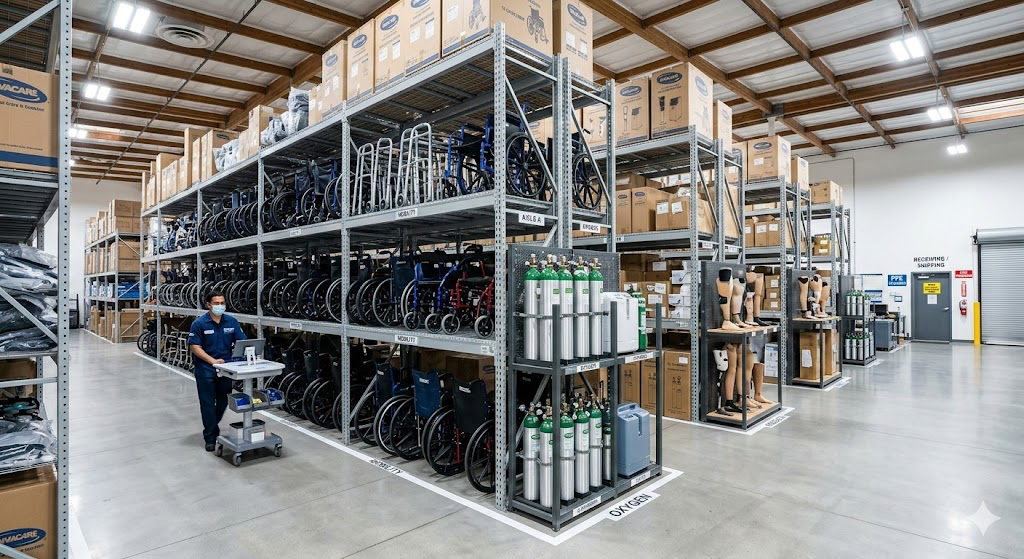
Medical equipment suppliers who bill Medicare face a non-negotiable federal requirement that catches many new businesses off guard. The Centers for Medicare and Medicaid Services mandates a $50,000 surety bond for every supplier of durable medical equipment, prosthetics, orthotics, and supplies—and without it, your ability to receive Medicare reimbursements stops completely. This financial guarantee protects taxpayers from fraud and ensures suppliers maintain ethical billing practices, but for business owners navigating the Medicare enrollment process, understanding bond costs, requirements, and procurement can mean the difference between swift approval and costly delays.
What Is a DMEPOS Bond?
A DMEPOS bond is a three-party surety agreement required by the Centers for Medicare and Medicaid Services under federal regulation 42 CFR 424.57(d). The bond amount is set at exactly $50,000 for all suppliers regardless of business size or revenue. This financial instrument creates a contractual relationship between the supplier (principal), the surety company (guarantor), and CMS (obligee).
The bond serves as a financial guarantee that suppliers will comply with all Medicare billing regulations and supplier standards outlined in 42 CFR 424. If a supplier commits fraud, submits false claims, or violates Medicare billing rules, CMS can file a claim against the bond to recover taxpayer funds. Unlike insurance that protects the bondholder, this bond protects the government and Medicare beneficiaries from financial harm caused by unethical suppliers.
DMEPOS stands for Durable Medical Equipment, Prosthetics, Orthotics, and Supplies. This broad category encompasses everything from hospital beds and wheelchairs to artificial limbs, back braces, and diabetic testing supplies. Any business that sells or rents these items to Medicare patients and seeks reimbursement from Medicare must maintain an active surety bond throughout their enrollment period.
The requirement applies uniformly across all 50 states and U.S. territories. There are no exemptions based on company size, years in business, or billing volume. Even suppliers who primarily serve private insurance patients must obtain the bond if they bill Medicare for any portion of their services.
Why CMS Requires This Bond
Medicare fraud costs taxpayers billions annually, with durable medical equipment representing one of the most frequently exploited categories. Fraudulent schemes have included billing for equipment never delivered, charging for high-end devices while providing cheaper alternatives, and creating shell companies that disappear after collecting payments.
The DMEPOS bond requirement emerged from the Medicare Prescription Drug, Improvement, and Modernization Act of 2003, which gave CMS authority to implement stronger supplier standards. The regulation became fully effective in 2009 as part of a comprehensive effort to reduce improper payments and protect Medicare beneficiaries from predatory business practices.
This bond creates immediate financial accountability. When CMS discovers billing violations, they can pursue bond claims without lengthy litigation. The surety company investigates claims and, if substantiated, pays up to the full $50,000 bond amount. The supplier must then reimburse the surety company for any paid claims, plus legal fees and interest.
Beyond fraud prevention, the bond requirement filters out undercapitalized businesses that lack the financial stability to obtain surety coverage. Surety companies conduct rigorous underwriting reviews including credit checks, financial statement analysis, and background investigations. This screening process helps ensure only legitimate, financially sound suppliers enter the Medicare program.
The bond also functions as a powerful deterrent. Suppliers understand that any Medicare violations could trigger bond claims, damage their credit, and make future bonding impossible—effectively ending their ability to participate in Medicare long-term.
Who Needs a DMEPOS Bond?
Any business entity that meets CMS’s definition of a DMEPOS supplier must secure this bond before receiving Medicare billing privileges. The requirement covers diverse business models and product categories.
Medical equipment retailers who sell wheelchairs, walkers, hospital beds, and mobility aids to Medicare patients need the bond. This includes both brick-and-mortar stores and online retailers. Oxygen suppliers providing home oxygen therapy equipment and services fall under this requirement, as do companies specializing in diabetic supplies including glucose monitors, testing strips, and insulin pumps.
Prosthetic and orthotic manufacturers and fitters must maintain the bond when billing Medicare for artificial limbs, custom braces, and orthopedic supports. Home medical equipment rental companies that lease items like CPAP machines, patient lifts, and wound care equipment require bonding regardless of whether they sell or only rent equipment.
The requirement extends to specialty suppliers including mastectomy product providers, ostomy supply companies, and lymphedema compression garment specialists. Even businesses that represent only a small percentage of their revenue through Medicare must maintain the full $50,000 bond if they bill the program at all.
New suppliers entering the Medicare program face mandatory bonding before CMS approves their enrollment application. Existing suppliers who let their bonds lapse receive immediate notification of non-compliance and risk losing their billing privileges if the bond isn’t reinstated within the cure period.
Companies with multiple locations face specific bonding requirements. Each physical location that bills Medicare separately needs its own National Provider Identifier and may require individual bonding depending on the business structure and how locations are enrolled with CMS.
DMEPOS Bond Cost
Premium costs for a $50,000 DMEPOS bond typically range from $500 to $2,500 annually, though some applicants with credit challenges may face higher rates. The wide pricing variance reflects how surety companies assess individual risk profiles.
Personal credit scores play the dominant role in premium calculations. Applicants with excellent credit scores above 700 generally qualify for rates between $500 and $750 annually—effectively 1% to 1.5% of the bond amount. Business owners with good credit in the 650-699 range typically pay $750 to $1,250. Those with fair credit between 600-649 often see quotes from $1,250 to $2,000. Applicants with credit scores below 600 may face premiums exceeding $2,000 or require additional underwriting conditions.
Business financials impact pricing for established companies. Surety underwriters review profit and loss statements, balance sheets, and cash flow to assess operational stability. Profitable companies with strong financial statements may receive preferred rates even if personal credit is marginal. Conversely, businesses operating at a loss or showing declining revenue trends face premium increases or collateral requirements.
Years in business influences risk assessment. Startups and companies operating less than two years generally pay higher premiums due to limited track record. Established suppliers with five or more years of successful Medicare billing history often qualify for better rates and easier underwriting approval.
Industry experience matters to underwriters. Business owners with extensive backgrounds in medical equipment sales and proven knowledge of Medicare billing regulations demonstrate lower risk than applicants entering the industry for the first time. Some surety companies offer rate reductions for applicants holding relevant certifications or advanced industry credentials.
Payment structures vary by surety company. Most offer annual premium payments, though some companies provide monthly payment plans with small financing fees. Multi-year bond terms occasionally offer discounted rates—a three-year term might reduce the effective annual cost by 10-15% compared to single-year renewals.
Application Requirements
Securing a DMEPOS bond requires submitting specific documentation that allows surety underwriters to evaluate financial risk and compliance capability.
The bond application form collects basic business information including legal entity name, federal tax identification number, physical business address, and contact details. Applicants must disclose the business structure—sole proprietorship, partnership, LLC, or corporation—as this affects underwriting approach and who signs the bond agreement.
Personal information from all business owners holding 10% or more ownership requires disclosure. This includes full legal names, Social Security numbers, dates of birth, and residential addresses. Surety companies run credit checks on each principal owner to assess individual creditworthiness and identify any prior bond claims, bankruptcies, or legal judgments.
Financial statements become necessary for certain applicants. Established businesses may need to provide recent profit and loss statements, balance sheets, and bank statements demonstrating adequate working capital. Startups without historical financials instead submit business plans, projected revenue statements, and documentation of startup capital sources.
The National Provider Identifier assigned by CMS must be provided, along with documentation proving the business holds required state licenses for operating as a medical equipment supplier. Accreditation from approved bodies like the Accreditation Commission for Health Care or Joint Commission on Accreditation of Healthcare Organizations strengthens applications significantly.
Background disclosures address prior legal and regulatory issues. Applications ask whether any owners have previous Medicare or Medicaid sanctions, prior bond claims, felony convictions, or ongoing litigation. Full transparency in these areas prevents future bond disputes and demonstrates good faith to underwriters.
Additional documentation may be requested for complex situations. Multi-location operations need organizational charts showing corporate structure. Businesses with prior Medicare violations must explain circumstances and demonstrate corrective actions. Applicants with credit challenges may submit letters of explanation addressing past financial difficulties and current stability.
How to Get a DMEPOS Bond
Obtaining your DMEPOS bond involves a straightforward four-step process that most suppliers complete within days. Start by submitting a bond application to a licensed surety provider like Swiftbonds along with the required documentation including business information, owner details, and any requested financial statements. The surety company reviews your application, runs credit checks, and evaluates your risk profile to determine your premium rate—this underwriting process typically completes within 24 to 48 hours for applicants with good credit and clear documentation.
Once approved, you receive a quote showing your annual premium cost and payment options. After you pay the premium, the surety company issues your official bond document showing the $50,000 coverage amount, your business name as principal, the surety company as guarantor, and CMS as obligee. Finally, you file this bond with CMS as part of your Medicare enrollment application or renewal, either electronically through the PECOS system or by mail to the Medicare administrative contractor for your region, and maintain continuous coverage by renewing annually before expiration.
Swiftbonds LLC
2025 Surety Bond Technology Provider of the Year
4901 W. 136th Street
Leawood KS 66224
(913) 214-8344
https://swiftbonds.com/
Bond Duration and Renewal
DMEPOS bonds operate on annual terms with specific timing requirements that suppliers must track carefully to maintain uninterrupted Medicare billing privileges.
Most surety companies issue bonds with one-year terms effective from the issue date. The bond remains active for exactly 365 days from the effective date printed on the bond form. Suppliers must track this anniversary date independently because CMS does not send renewal reminders, and even brief lapses in coverage trigger compliance violations.
Renewal typically requires minimal documentation for suppliers in good standing. Surety companies conduct updated credit checks and may request confirmation that no Medicare violations or bond claims have occurred during the previous term. Suppliers with consistent payment history and no compliance issues often receive automatic renewal offers 45-60 days before expiration at similar or improved rates.
Premium adjustments at renewal reflect changes in credit scores, business financials, and claims history. Suppliers who improve credit scores or demonstrate business growth may qualify for rate reductions. Conversely, credit score declines, financial losses, or Medicare compliance warnings can trigger premium increases or additional underwriting requirements.
Switching surety companies at renewal is permitted but requires careful timing. The new bond must become effective before the existing bond expires to prevent coverage gaps. Some suppliers shop rates annually to find competitive pricing, while others value continuity with established surety relationships.
CMS requires immediate notification if a bond is canceled or not renewed. Surety companies must provide 30 days advance notice to both the supplier and CMS before canceling a bond. This grace period allows suppliers to secure replacement coverage, but finding new bonding after cancellation often proves difficult and expensive due to red flags in underwriting databases.
Suppliers who let bonds lapse face immediate consequences. CMS places accounts on hold, preventing new claim submissions and potentially recouping recent payments. Reinstating billing privileges after a lapse requires obtaining new bond coverage, submitting updated enrollment documentation, and waiting for CMS to process reinstatement—a process that can take weeks or months, causing significant revenue disruption.
Understanding Bond Claims
Bond claims against DMEPOS suppliers occur when CMS determines a supplier violated Medicare regulations and caused financial harm to the program. Understanding the claims process helps suppliers maintain compliance and protect their bonding capacity.
CMS files bond claims for various violations including submitting false claims for equipment never delivered, billing for higher-cost items than actually provided, charging for medically unnecessary equipment, continuing to bill after a patient’s death, and systematic documentation failures that prevent verification of medical necessity.
The claims process begins when CMS identifies potential fraud or abuse through routine claims audits, beneficiary complaints, or fraud investigation units. CMS notifies the supplier of alleged violations and provides opportunity to respond with evidence and documentation. If CMS determines violations occurred and caused financial harm, they submit a formal claim to the surety company demanding repayment up to the $50,000 bond limit.
Surety companies conduct independent claim investigations rather than automatically paying CMS demands. Investigators review Medicare billing records, delivery documentation, physician orders, and patient signatures to determine claim validity. Suppliers must cooperate fully by providing requested documentation and written statements explaining circumstances. This investigation typically takes 30-90 days depending on claim complexity.
Valid claims result in surety payment to CMS followed by immediate demand for reimbursement from the supplier. The bond agreement makes the supplier ultimately liable for all paid claims plus interest and legal fees. Surety companies pursue aggressive collection including lawsuits, wage garnishment, and property liens if suppliers refuse to reimburse voluntarily.
Claim payments create long-term bonding consequences. Once a claim is paid, that surety company typically refuses future coverage. Other surety companies discover the claim through industry databases and either decline bonding applications or charge prohibitively high premiums reflecting extreme risk. Suppliers with bond claim history often cannot obtain new DMEPOS bonds, effectively ending their Medicare participation.
Preventing claims requires strict compliance with Medicare billing rules, meticulous documentation of every equipment delivery and medical necessity, regular staff training on proper billing procedures, and prompt response to any CMS inquiries or audit requests. Suppliers should maintain detailed records exceeding Medicare’s minimum retention requirements and consider working with Medicare compliance consultants to establish robust internal controls.
State-Specific Considerations
While the federal DMEPOS bond requirement applies uniformly across all states, suppliers must also navigate state-level licensing and bonding requirements that vary significantly by location.
Some states impose additional bond requirements beyond the federal $50,000 DMEPOS bond. Medical equipment suppliers operating in these states must maintain separate state-specific bonds to comply with state licensing laws. These state bonds typically range from $5,000 to $25,000 and protect consumers from state-level regulatory violations separate from Medicare fraud.
State licensing boards for medical equipment suppliers have varying standards for experience, training, and business practices. Certain states require designated managers to hold specific certifications, complete continuing education hours, or pass examinations demonstrating knowledge of proper equipment fitting and billing procedures. These requirements exist independently from federal Medicare enrollment and may necessitate hiring qualified personnel before securing necessary licenses.
States with particularly complex regulatory frameworks include California, Florida, New York, and Texas. These states have large Medicare populations and correspondingly strict oversight of medical equipment suppliers. California requires additional registration with the Department of Public Health for certain equipment categories. Florida mandates permits from the Agency for Health Care Administration before supplying oxygen therapy equipment. New York enforces detailed record-keeping requirements that exceed federal standards. Texas requires separate licensing for different equipment subcategories.
Multi-state operations face compounded compliance complexity. Suppliers serving patients across state lines must secure appropriate licenses and bonds in each state where they deliver equipment or maintain physical locations. Some states require bonding even for suppliers without physical presence if they ship equipment to state residents.
Tribal lands add another jurisdictional layer. Native American reservations often have sovereign regulations governing healthcare suppliers. Suppliers serving reservation-based Medicare beneficiaries should consult tribal authorities regarding any additional bonding or licensing requirements beyond federal mandates.
Working with surety providers experienced in multi-state medical equipment bonding helps navigate these variations. Specialized surety companies understand state-specific requirements and can structure bonding programs covering federal DMEPOS requirements plus applicable state bonds through coordinated underwriting and consolidated premium payments.
Accreditation Requirements
Beyond bonding, CMS requires DMEPOS suppliers to obtain accreditation from CMS-approved accrediting organizations—a separate but equally critical enrollment requirement.
Accreditation involves comprehensive evaluation of business operations, quality standards, and compliance systems. Approved accrediting organizations include the Accreditation Commission for Health Care, Community Health Accreditation Partner, DNV Healthcare, and The Joint Commission. Each organization maintains slightly different standards and evaluation processes, though all meet CMS’s minimum requirements for supplier oversight.
The accreditation process begins with a detailed application documenting business operations, staffing qualifications, equipment inventory, delivery procedures, and compliance programs. Organizations charge application fees ranging from $1,500 to $5,000 depending on business size and complexity. Initial accreditation requires on-site surveys where evaluators inspect physical facilities, review documentation systems, interview staff, and assess compliance with detailed quality standards.
Suppliers must demonstrate compliance with specific operational standards including maintaining a physical facility accessible to patients and CMS surveyors, employing trained staff knowledgeable in proper equipment use and Medicare billing, maintaining adequate inventory to meet patient needs, implementing quality assurance programs monitoring patient outcomes and satisfaction, and establishing compliance programs addressing Medicare billing rules and fraud prevention.
Accreditation lasts three years but requires annual self-assessments and periodic re-evaluations. Accrediting organizations conduct unannounced on-site surveys to verify ongoing compliance with standards. Suppliers failing to maintain accreditation standards face probationary status, corrective action requirements, or loss of accreditation—any of which can trigger immediate suspension of Medicare billing privileges.
The bond and accreditation work together in CMS’s supplier screening framework. Bonding provides financial protection against fraud while accreditation ensures operational quality and compliance capability. Suppliers cannot bypass either requirement—both must remain current throughout Medicare enrollment.
Some accrediting organizations offer combined bonding and accreditation services or maintain partnerships with surety providers for streamlined processing. Coordinating these requirements through integrated programs can reduce administrative burden and ensure compliance deadlines align properly.
Common Mistakes to Avoid
Suppliers navigating DMEPOS bond requirements frequently encounter preventable errors that delay Medicare enrollment or create compliance vulnerabilities.
Waiting until the last minute to apply for bonding creates unnecessary risk. Surety underwriting can take several days, and applications with credit issues or complex business structures may require additional documentation and extended review periods. Suppliers should begin the bonding process at least 30 days before Medicare application deadlines or renewal dates to allow adequate processing time.
Providing incomplete or inaccurate information on bond applications delays approvals and may result in declined coverage. Suppliers must disclose all requested information truthfully including prior legal issues, bankruptcies, and business ownership changes. Omissions discovered during underwriting trigger automatic application denials and create red flags that complicate future bonding attempts.
Failing to understand the difference between the bond and liability insurance causes confusion. The DMEPOS bond protects CMS from supplier fraud—it does not protect the supplier from patient injury claims or property damage. Suppliers need separate commercial general liability insurance to protect their business from these risks, and mistakenly believing the bond provides comprehensive protection leaves dangerous coverage gaps.
Neglecting to track bond expiration dates leads to coverage lapses that immediately jeopardize Medicare billing privileges. Calendar reminders should be set for 60 days before expiration, and renewal applications should be submitted well in advance to prevent any gap in coverage. Many suppliers lose thousands in revenue during coverage gaps caused by simple oversight.
Assuming bad credit disqualifies bonding applications prevents many qualified suppliers from even attempting to secure coverage. While poor credit increases premiums, most surety companies offer bonding options for applicants with challenged credit through higher rates or collateral requirements. Suppliers should apply despite credit concerns rather than abandoning Medicare participation based on assumptions.
Mixing up bond amounts from different states or requirements creates problems. The federal DMEPOS bond is always $50,000 regardless of state location or business size. Some suppliers mistakenly purchase smaller state-level bonds thinking they satisfy the federal requirement, only to discover during Medicare enrollment that they lack proper coverage.
Frequently Asked Questions
How much does a DMEPOS bond cost?
DMEPOS bond premiums typically range from $500 to $2,500 annually for the required $50,000 bond amount. The exact cost depends primarily on your personal credit score, with excellent credit qualifying for rates around 1-1.5% of the bond amount while challenged credit may result in rates of 3-5% or higher. Business financial strength, years of operation, and industry experience also influence premium calculations.
Can I get a DMEPOS bond with bad credit?
Yes, suppliers with bad credit can obtain DMEPOS bonds, though premiums will be higher than standard rates. Surety companies specializing in high-risk bonding offer coverage for credit scores below 600, typically requiring premiums between $2,000 and $4,000 annually. Some underwriters may also require collateral such as cash deposits or liens on business assets to secure approval for applicants with very poor credit or recent bankruptcies.
How long does it take to get a DMEPOS bond?
Most suppliers receive DMEPOS bonds within 24-48 hours after submitting complete applications with all required documentation. Applicants with excellent credit and straightforward business structures often receive same-day approvals and electronic bond delivery. Applications requiring additional underwriting review due to credit issues, startup status, or complex ownership structures may take 3-5 business days for final approval and bond issuance.
What happens if my DMEPOS bond expires?
If your DMEPOS bond expires without renewal, CMS immediately suspends your Medicare billing privileges and stops processing new claims. You will receive notification of non-compliance and typically have a 30-day cure period to obtain new bond coverage and submit proof to CMS. During the coverage gap, you cannot submit claims, and CMS may recoup recent payments. Restoring billing privileges after a lapse requires resubmitting updated enrollment documentation and waiting for CMS to process reinstatement, which can take several weeks.
Is the DMEPOS bond refundable?
No, DMEPOS bond premiums are not refundable. The premium represents the cost of surety coverage for the bond term, similar to insurance premiums. Even if you cancel your Medicare enrollment mid-term or no longer need the bond, surety companies do not refund unused premium. However, if you cancel a bond before the term begins, some surety companies may refund premiums minus administrative fees depending on their specific policies.
Do I need a separate bond for each business location?
It depends on how your business locations are structured and enrolled with Medicare. If each location operates as a separate legal entity with its own National Provider Identifier, each location needs its own $50,000 DMEPOS bond. However, if multiple locations operate under a single legal entity and NPI as branch locations, a single bond may cover all locations depending on CMS enrollment structure. Consult with your Medicare administrative contractor to determine the specific bonding requirements for your business configuration.
What is the difference between a DMEPOS bond and liability insurance?
A DMEPOS bond protects the Centers for Medicare and Medicaid Services from financial loss caused by supplier fraud or billing violations, while liability insurance protects your business from claims related to property damage, patient injuries, or professional errors. The bond is a federal requirement for Medicare enrollment, whereas liability insurance is a business risk management tool. You need both—the bond to satisfy CMS requirements and liability insurance to protect your business from lawsuits and claims.
Can I switch surety companies?
Yes, you can switch surety companies at renewal or during your bond term, though switching mid-term requires careful coordination. When changing companies, ensure the new bond’s effective date begins before your current bond expires to prevent coverage gaps. Shopping rates annually is common practice, especially if your credit score has improved or your current premium seems high compared to market rates. However, frequent switching may complicate underwriting as some surety companies view it as a potential red flag.
Conclusion
The DMEPOS bond represents more than a regulatory checkbox—it serves as the financial foundation of Medicare’s supplier integrity framework. Suppliers who understand bonding requirements, plan ahead for acquisition and renewal, and maintain strict compliance with Medicare billing rules protect both their businesses and the Medicare beneficiaries they serve. While the $50,000 bond amount remains fixed, the true cost lies in comprehensive compliance systems that prevent violations, meticulous documentation practices that withstand audits, and ongoing education that keeps pace with evolving Medicare regulations. Success in the DMEPOS sector requires balancing operational efficiency with unwavering adherence to the federal standards this bond is designed to enforce.
Five Unique Facts About DMEPOS Bonds
The DMEPOS bond requirement emerged from a specific Medicare fraud case in the early 2000s involving phantom wheelchair companies that billed Medicare over $300 million for wheelchairs never delivered to patients. These shell companies operated briefly, collected payments, and vanished before investigations concluded. This case directly influenced Congress to mandate surety bonds as an enrollment barrier.
Interestingly, the $50,000 bond amount has never been adjusted for inflation since the requirement took effect in 2009. In today’s dollars, that original $50,000 would equal approximately $72,000, meaning the actual financial protection has effectively decreased by 30% over fifteen years while healthcare costs and fraud schemes have grown substantially more sophisticated.
DMEPOS suppliers represent one of the few Medicare provider categories required to maintain both surety bonds and accreditation simultaneously. Physicians, hospitals, and home health agencies face extensive licensing but generally don’t need surety bonds, making the dual requirement unique to equipment suppliers and reflecting CMS’s particular concern about fraud in this sector.
The bond claim rate for DMEPOS suppliers remains remarkably low at less than 2% annually, despite widespread media coverage of Medicare fraud. This low claim rate suggests the bond requirement successfully deters fraudulent actors from entering the program rather than catching them after violations occur. Legitimate suppliers with proper compliance programs rarely trigger claims.
Some states have attempted to impose DMEPOS bond requirements exceeding the federal $50,000 minimum, but CMS regulations preempt state law in this area under federal supremacy doctrine. This means states cannot require higher bond amounts for Medicare billing purposes, though they can impose separate state-level bonds for state licensing purposes unrelated to Medicare enrollment.